Saltar al contenido
Merck

61743

N-Lauroilsarcosina sodium salt

BioUltra, Molecular Biology, ≥99.0% (HPLC)

Sinónimos:

N-Dodecanoil-N-metilglicina sodium salt, Sarkosyl NL

Iniciar sesión para ver los precios por organización y contrato.

Seleccione un Tamaño


Acerca de este artículo

Fórmula lineal:
CH3(CH2)10CON(CH3)CH2COONa
Número CAS:
Peso molecular:
293.38
UNSPSC Code:
12161900
NACRES:
NA.25
PubChem Substance ID:
EC Number:
205-281-5
Beilstein/REAXYS Number:
5322974
MDL number:
Servicio técnico
¿Necesita ayuda? Nuestro equipo de científicos experimentados está aquí para ayudarle.
Permítanos ayudarle
Servicio técnico
¿Necesita ayuda? Nuestro equipo de científicos experimentados está aquí para ayudarle.
Permítanos ayudarle

Nombre del producto

N-Lauroilsarcosina sodium salt, BioUltra, Molecular Biology, ≥99.0% (HPLC)

InChI key

KSAVQLQVUXSOCR-UHFFFAOYSA-M

InChI

1S/C15H29NO3.Na/c1-3-4-5-6-7-8-9-10-11-12-14(17)16(2)13-15(18)19;/h3-13H2,1-2H3,(H,18,19);/q;+1/p-1

SMILES string

[Na+].CCCCCCCCCCCC(=O)N(C)CC([O-])=O

grade

Molecular Biology

description

anionic

product line

BioUltra

assay

≥99.0% (HPLC)

form

powder

mol wt

micellar avg mol wt 600
average mol wt 600

aggregation number

2

impurities

DNases, none detected
RNases, none detected
insoluble matter, passes filter test
phosphatases, none detected
proteases, none detected

loss

≤1% loss on drying, 110 °C

pH

7.0-9.0 (25 °C, 1 M in H2O)

CMC

14.6 mM (20-25°C)

solubility

H2O: 1 M at 20 °C, clear, colorless

anion traces

chloride (Cl-): ≤50 mg/kg
sulfate (SO42-): ≤50 mg/kg

cation traces

Al: ≤5 mg/kg
As: ≤0.1 mg/kg
Ba: ≤5 mg/kg
Bi: ≤5 mg/kg
Ca: ≤10 mg/kg
Cd: ≤5 mg/kg
Co: ≤5 mg/kg
Cr: ≤5 mg/kg
Cu: ≤5 mg/kg
Fe: ≤5 mg/kg
K: ≤50 mg/kg
Li: ≤5 mg/kg
Mg: ≤5 mg/kg
Mn: ≤5 mg/kg
Mo: ≤5 mg/kg
Ni: ≤5 mg/kg
Pb: ≤5 mg/kg
Sr: ≤5 mg/kg
Zn: ≤5 mg/kg

λ

1 M in H2O

UV absorption

λ: 260 nm Amax: 0.2
λ: 280 nm Amax: 0.06

application(s)

sample preservation

Quality Level

¿Está buscando productos similares? Visita Guía de comparación de productos

Other Notes

Tensioactivo aniónico.

Application

N-Lauroylsarcosine sodium salt has been used as a component:

  • of nuclease stop mix, embryo extract buffer to dissociate nonspecifically bound proteins from chromatin
  • of proteinase K solution for the heat denaturation of genomic DNA
  • of 10% (w/v) sarcosyl/0.5 M ethylenediaminetetraacetic acid (EDTA) solution to prepare EDTA-sarcosyl-proteinase (ESP) buffer
  • in the hybridization buffer for in situ hybridization histochemistry
  • in the embryo extract buffer to dissociate nonspecifically bound proteins from chromatin
  • in proteinase K solution to inactivate the enzymes

General description

The N-lauroylsarcosine sodium salt is applicable for processes that require tight control of elemental content. This product aids in the solubilization and separation of membrane proteins, glycoproteins, and the isolation of RNA and plasmids. N-lauroylsarcosine sodium salt serves as an antifoaming supplement or as a component of a lysing buffer of bacteria or other cells. It indicates the paramagnetic anisotropy sign change in the micelle mesophase. N-lauroylsarcosine sodium salt inhibits hexokinase and the bacterial flora of human saliva/gut at 0.25%. It also exhibits fungistatic activity in aqueous dispersion (1%). N-lauroylsarcosine (LS) is an anionic surfactant with protein denaturant potency that is structurally similar to sodium lauryl sulfate (SLS). It can inactivate herpes simplex virus (HSV) infectivity in vitro. It is used as a microbicide in topical vaginal formulations to block the transmission of HSV, human immunodeficiency virus type 1 (HIV-1), and possibly other pathogens causing sexually transmitted diseases (STDs).

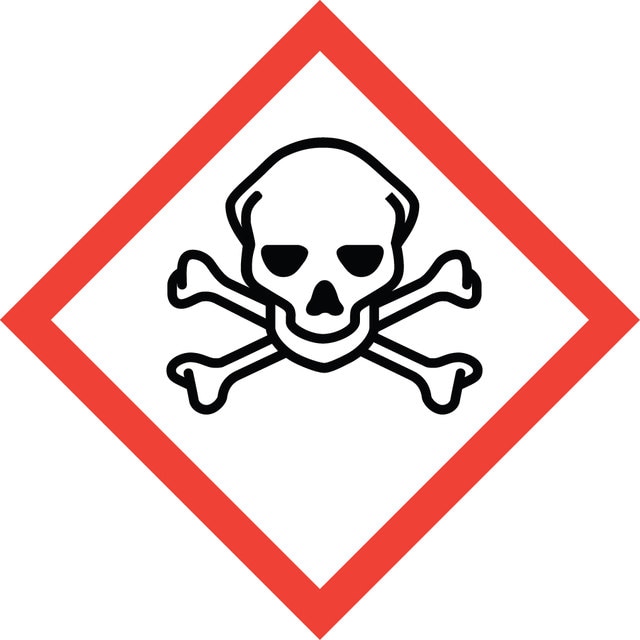
pictograms

Skull and crossbonesCorrosion

signalword

Danger

Hazard Classifications

Acute Tox. 2 Inhalation - Eye Dam. 1 - Skin Irrit. 2

Clase de almacenamiento

6.1A - Combustible acute toxic Cat. 1 and 2 / very toxic hazardous materials

wgk

WGK 1

flash_point_f

512.6 °F - closed cup

flash_point_c

267 °C - closed cup

ppe

Eyeshields, Gloves, type N95 (US)


Elija entre una de las versiones más recientes:

Certificados de análisis (COA)

Lot/Batch Number

¿No ve la versión correcta?

Si necesita una versión concreta, puede buscar un certificado específico por el número de lote.

¿Ya tiene este producto?

Encuentre la documentación para los productos que ha comprado recientemente en la Biblioteca de documentos.

Visite la Librería de documentos

Iryna Benilova et al.
Proceedings of the National Academy of Sciences of the United States of America, 117(38), 23815-23822 (2020-09-10)
Prions are infectious agents which cause rapidly lethal neurodegenerative diseases in humans and animals following long, clinically silent incubation periods. They are composed of multichain assemblies of misfolded cellular prion protein. While it has long been assumed that prions are
Shunfei Yan et al.
British journal of cancer, 124(3), 616-627 (2020-11-12)
Intrinsic and acquired drug resistance represent fundamental barriers to the cure of high-grade serous ovarian carcinoma (HGSC), the most common histological subtype accounting for the majority of ovarian cancer deaths. Defects in homologous recombination (HR) DNA repair are key determinants
Gültekin Tamgüney et al.
Proceedings of the National Academy of Sciences of the United States of America, 106(35), 15002-15006 (2009-08-27)
Prions are infectious proteins that cause fatal neurodegenerative diseases. Because astrocytic gliosis marked by the deposition of fibrils composed of GFAP is a prominent feature of prion disease, we asked whether GFAP might be used as a surrogate marker for
Linda A Terry et al.
Veterinary research, 42, 65-65 (2011-05-20)
Classical scrapie is a naturally transmitted prion disease of sheep and goats. Contaminated environments may contribute to the spread of disease and evidence from animal models has implicated urine, blood, saliva, placenta and faeces as possible sources of the infection.
Kunie Ando et al.
Journal of Alzheimer's disease : JAD, 40 Suppl 1, S135-S145 (2014-03-13)
Active immunization using tau phospho-peptides in tauopathy mouse models has been observed to reduce tau pathology, especially when given prior to the onset of pathology. Since tau aggregates in these models and in human tauopathies are composed of full-length tau

Contenido relacionado

Nuestro equipo de científicos tiene experiencia en todas las áreas de investigación: Ciencias de la vida, Ciencia de los materiales, Síntesis química, Cromatografía, Analítica y muchas otras.

Póngase en contacto con el Servicio técnico