
A5486

Azoximetano
13.4 M, ≥98%
Sinónimos:
AOM
Seleccione un Tamaño
Acerca de este artículo
Nombre del producto
Azoximetano, 13.4 M, ≥98%
InChI key
DGAKHGXRMXWHBX-ONEGZZNKSA-N
SMILES string
C\N=[N+](/C)[O-]
InChI
1S/C2H6N2O/c1-3-4(2)5/h1-2H3/b4-3+
assay
≥98%
form
liquid
composition
methylene chloride, ≤1%
storage condition
(Keep container tightly closed in a dry and well-ventilated place.)
concentration
13.4 M
color
colorless
bp
97-99 °C (lit.)
density
0.991 g/mL at 25 °C (lit.)
application(s)
genomic analysis
storage temp.
−20°C
Quality Level
¿Está buscando productos similares? Visita Guía de comparación de productos
Application
Biochem/physiol Actions
Features and Benefits
General description
Other Notes
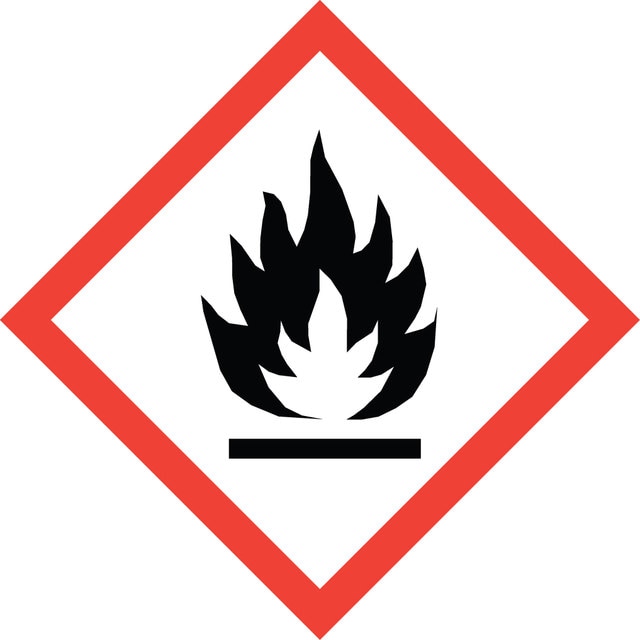
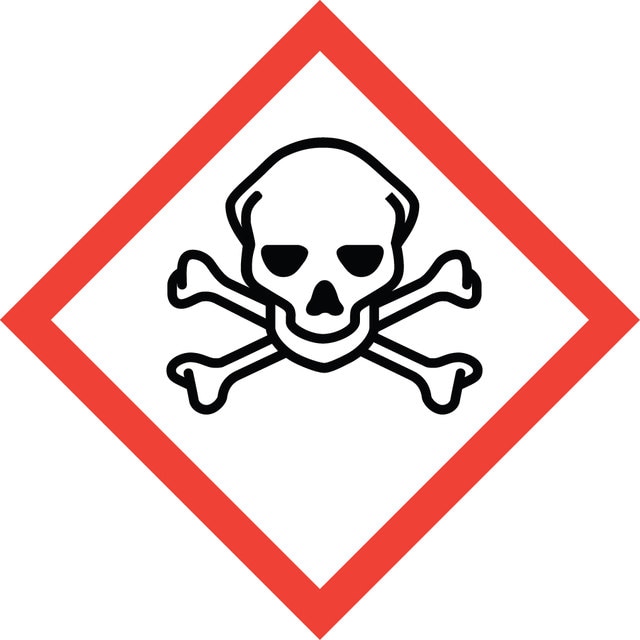

signalword
Danger
hcodes
Hazard Classifications
Acute Tox. 2 Oral - Carc. 1B - Eye Irrit. 2 - Flam. Liq. 3 - Skin Irrit. 2
Clase de almacenamiento
3 - Flammable liquids
wgk
WGK 3
flash_point_f
75.2 °F
flash_point_c
24 °C
Elija entre una de las versiones más recientes:
¿Ya tiene este producto?
Encuentre la documentación para los productos que ha comprado recientemente en la Biblioteca de documentos.
How does the storage temperature relate to shipping conditions?
The storage conditions that a Sigma-Aldrich catalog and label recommend for products are deliberately conservative. For many products, long-term storage at low temperatures will increase the time during which they are expected to remain in specification and therefore are labeled accordingly. Where short-term storage, shipping time frame, or exposure to conditions other than those recommended for long-term storage will not affect product quality, Sigma-Aldrich will ship at ambient temperature. The products sensitive to short-term exposure to conditions other than their recommended long-term storage are shipped on wet or dry ice. Ambient temperature shipping helps to control shipping costs for our customers. At any time, our customers can request wet- or dry-ice shipment, but the special handling is at customer expense if our product history indicates that the product is stable for regular shipment. See Shipping and Storage for more information.
Which document(s) contains shelf-life or expiration date information for a given product?
If available for a given product, the recommended re-test date or the expiration date can be found on the Certificate of Analysis.
How do I get lot-specific information or a Certificate of Analysis?
The lot specific COA document can be found by entering the lot number above under the "Documents" section.
How do I find price and availability?
There are several ways to find pricing and availability for our products. Once you log onto our website, you will find the price and availability displayed on the product detail page. You can contact any of our Customer Sales and Service offices to receive a quote. USA customers: 1-800-325-3010 or view local office numbers.
What is the Department of Transportation shipping information for this product?
Transportation information can be found in Section 14 of the product's (M)SDS.To access the shipping information for this material, use the link on the product detail page for the product.
What solvents can be used to dissolve Azoxymethane?
Azoxymethane is soluble in water, ether, ethanol, and chloroform. The reported solubility in chlorform is 200 mg/mL, and in water is 100 mg/mL.
How should stock solutions of Azoxymethane be stored, and for how long can they be kept?
No solution stability studies have been performed by Sigma-Aldrich. Because the solution stability is unknown, solutions should be prepared fresh for use.
How does azoxymethane act to cause cancers?
Azoxymethane is a methylating agent which forms 6-O-methylguanine in DNA. Unless this methylated base is repaired by cellular enzymes, it results in a base mismatch that subsequently causes tumors in the tissue.
What are the approximate volumes for the of 25 mg and 100 mg, package sizes of Product No. A5486, Azoxymethane?
Using the literature value for density of approximately 0.991 g/mL (at 25 °C), the approximate volumes are 25 μL for the 25 mg package size and 100 μl for the 100 mg package size.
My question is not addressed here, how can I contact Technical Service for assistance?
Ask a Scientist here.
Contenido relacionado
Nuestro equipo de científicos tiene experiencia en todas las áreas de investigación: Ciencias de la vida, Ciencia de los materiales, Síntesis química, Cromatografía, Analítica y muchas otras.
Póngase en contacto con el Servicio técnico