
Saltar al contenido
Merck

C9623

Chetomin

from Chaetomium cochliodes, ≥98% (HPLC)

Sinónimos:

Chaetomin, NSC 289491

Iniciar sesión para ver los precios por organización y contrato.

Seleccione un Tamaño


Acerca de este artículo

Fórmula empírica (notación de Hill):
C31H30N6O6S4
Número CAS:
Peso molecular:
710.87
MDL number:
UNSPSC Code:
41100000
NACRES:
NA.77
Assay:
≥98% (HPLC)
Form:
powder
Quality level:
Servicio técnico
¿Necesita ayuda? Nuestro equipo de científicos experimentados está aquí para ayudarle.
Permítanos ayudarle
Servicio técnico
¿Necesita ayuda? Nuestro equipo de científicos experimentados está aquí para ayudarle.
Permítanos ayudarle

biological source

Chaetomium cochliodes

Quality Level

assay

≥98% (HPLC)

form

powder

solubility

DMSO: soluble, acetone: soluble, ethyl acetate: soluble

storage temp.

−20°C

SMILES string

S1SC9(N(C(=O)C1(N(C9=O)C)CO)C)Cc2c3c([n](c2)C54C(N7C8(SSC(N(C8=O)C)(C7=O)CO)C5)Nc6c4cccc6)cccc3

InChI

1S/C31H30N6O6S4/c1-33-25(42)30(15-38)34(2)23(40)28(33,44-46-30)12-17-13-36(21-11-7-4-8-18(17)21)27-14-29-24(41)35(3)31(16-39,47-45-29)26(43)37(29)22(27)32-20-10-6-5-9-19(20)27/h4-11,13,22,32,38-39H,12,14-16H2,1-3H3

InChI key

ZRZWBWPDBOVIGQ-UHFFFAOYSA-N

Biochem/physiol Actions
Chetomin is a natural metabolite produced by several species of the genus Chaetomium. Chetomin disrupts the hypoxia-inducible factor (HIF) pathway, blockomg the interaction of HIF1α and HIF2α with transcriptional co-activators p300 and cAMP response element binding (CREB) binding protein (CBP), thereby attenuating hypoxia-inducible transcription. Disrupting the ability of tumors to adapt to hypoxia leads to decreased tumor growth; hypoxia can also promote resistance to radiotherapeutics. By both of these mechanisms, chetomin shows promise as a lead compound in antitumor research. Chetomin also suppresses the proliferation of LPS-induced mouse spleen lymphocytes.
Chetomin is a natural metabolite produced by several species of the genus Chaetomium. Chetomin is an epidithiodioxopiperazine known to disrupt the hypoxia-inducible factor (HIF) pathway. Chetomin blocks the interaction of HIF1α and HIF2α with transcriptional co-activators p300 and cAMP response element binding (CREB) binding protein (CBP), thereby attenuating hypoxia-inducible transcription. Disrupting the ability of tumors to adapt to hypoxia leads to decreased tumor growth and can serve as an antitumor stratagy. Chetomin also suppresses the proliferation of LPS-induced mouse spleen lymphocytes.
Chetomin is a natural metabolite, which blocks the interaction of HIF1α and HIF2α with transcriptional co-activators p300 and cAMP response element binding (CREB) binding protein (CBP), thereby attenuating hypoxia-inducible transcription. Chetomin also suppresses the proliferation of LPS-induced mouse spleen lymphocytes.

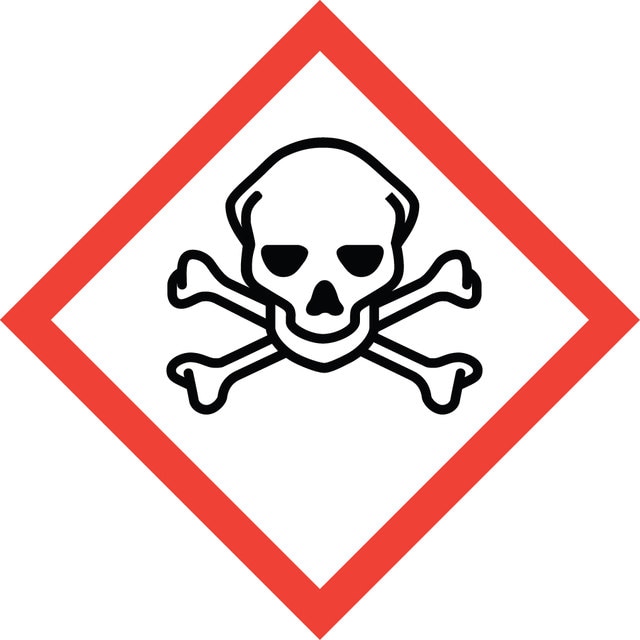
pictograms

Skull and crossbones

signalword

Danger

hcodes

Hazard Classifications

Acute Tox. 3 Oral

Clase de almacenamiento

6.1C - Combustible acute toxic Cat.3 / toxic compounds or compounds which causing chronic effects

wgk

WGK 3

flash_point_f

Not applicable

flash_point_c

Not applicable


Elija entre una de las versiones más recientes:

Certificados de análisis (COA)

Lot/Batch Number

It looks like we've run into a problem, but you can still download Certificates of Analysis from our Documentos section.

Si necesita más asistencia, póngase en contacto con Atención al cliente

¿Ya tiene este producto?

Encuentre la documentación para los productos que ha comprado recientemente en la Biblioteca de documentos.

Visite la Librería de documentos

Huimin Lu et al.
The FEBS journal, 276(24), 7291-7304 (2009-11-17)
Aberrant differentiation is a characteristic feature of neoplastic transformation, while hypoxia in solid tumors is believed to be linked to aggressive behavior and poor prognosis. However, the possible relationship between hypoxia and differentiation in malignancies remains poorly defined. Here we
Adrian Staab et al.
BMC cancer, 7, 213-213 (2007-11-15)
Hypoxia-inducible factor-1 (HIF-1) overexpression has been linked to tumor progression and poor prognosis. We investigated whether targeting of HIF-1 using chetomin, a disrupter of the interaction of HIF-1 with the transcriptional coactivator p300, influences the radiosensitivity of hypoxic HT 1080
Manuela Indelicato et al.
Journal of cellular physiology, 223(2), 359-368 (2010-01-30)
Survival strategies adopted by tumor cells in response to a hypoxic stress include activation of hypoxia-inducible factor 1 (HIF-1) and autophagy. However, the importance and the function of each molecular response is not well defined. In the present study, we
Laura K Henchey et al.
Journal of the American Chemical Society, 132(3), 941-943 (2010-01-01)
Designed ligands that inhibit hypoxia-inducible gene expression could offer new tools for genomic research and, potentially, drug discovery efforts for the treatment of neovascularization in cancers. We report a stabilized alpha-helix designed to target the binding interface between the C-terminal
Chetomin an antibiotic substance from Chaetomium cochliodes; composition and functional groups.
W B GEIGER
Archives of biochemistry, 21(1), 125-131 (1949-03-01)

Contenido relacionado

Nuestro equipo de científicos tiene experiencia en todas las áreas de investigación: Ciencias de la vida, Ciencia de los materiales, Síntesis química, Cromatografía, Analítica y muchas otras.

Póngase en contacto con el Servicio técnico