Iniciar sesión para ver los precios por organización y contrato.
Seleccione un Tamaño
Acerca de este artículo
Fórmula empírica (notación de Hill):
C22H17ClN2
Número CAS:
Peso molecular:
344.84
UNSPSC Code:
12352200
PubChem Substance ID:
NACRES:
NA.77
MDL number:
Servicio técnico
¿Necesita ayuda? Nuestro equipo de científicos experimentados está aquí para ayudarle.
Permítanos ayudarleServicio técnico
¿Necesita ayuda? Nuestro equipo de científicos experimentados está aquí para ayudarle.
Permítanos ayudarleNombre del producto
TRAM-34, ≥98% (HPLC), solid
SMILES string
Clc1ccccc1C(c2ccccc2)(c3ccccc3)n4cccn4
InChI
1S/C22H17ClN2/c23-21-15-8-7-14-20(21)22(25-17-9-16-24-25,18-10-3-1-4-11-18)19-12-5-2-6-13-19/h1-17H
InChI key
KBFUQFVFYYBHBT-UHFFFAOYSA-N
assay
≥98% (HPLC)
form
solid
color
off-white
solubility
DMSO: 2 mg/mL
H2O: insoluble
storage temp.
2-8°C
Quality Level
Application
TRAM-34 has been used to study its effect on the prevention of vascular restenosis after balloon angioplasty.
Biochem/physiol Actions
TRAM-34 exhibits 100-fold selectivity (Kd = 20 nM) for IKCa1 channels over other K+ channels (Charybdotoxin, Kd = 5 nM, Clotrimazole, Kd = 70 nM; Nitrendipine Kd = 900 nM). Furthermore, TRAM-34 is known to suppress the activation of human T lymphocytes,.
TRAM-34 is a potent inhibitor of the intermediate-conductance Ca2+-activated K+ channel.
Features and Benefits
This compound is featured on the Potassium Channels page of the Handbook of Receptor Classification and Signal Transduction. To browse other handbook pages, click here.
Preparation Note
TRAM-34 is soluble in DMSO at 2 mg/ml. However, it is insoluble in water.
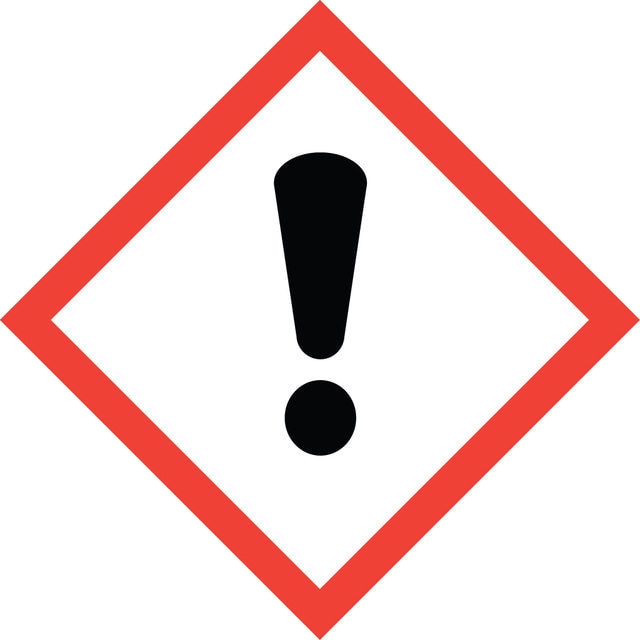
signalword
Warning
hcodes
Hazard Classifications
Acute Tox. 4 Oral - Aquatic Chronic 4
Clase de almacenamiento
11 - Combustible Solids
wgk
WGK 3
flash_point_f
Not applicable
flash_point_c
Not applicable
ppe
dust mask type N95 (US), Eyeshields, Gloves
Elija entre una de las versiones más recientes:
¿Ya tiene este producto?
Encuentre la documentación para los productos que ha comprado recientemente en la Biblioteca de documentos.
C Kondo et al.
Experimental physiology, 103(8), 1101-1122 (2018-05-24)
What is the central question of this study? What are the main [Ca2+ ]i signalling pathways activated by ATP in human synovial fibroblasts? What is the main finding and its importance? In human synovial fibroblasts ATP acts through a linked
Nicole Glaser et al.
Pediatric diabetes, 18(5), 356-366 (2016-05-14)
Diabetic ketoacidosis (DKA) causes brain injuries in children ranging from subtle to life-threatening. Previous studies suggest that DKA-related brain injury may involve both stimulation of Na-K-Cl cotransport and microglial activation. Other studies implicate the Na-K-Cl cotransporter and the Ca-activated K
Friederike A Steudel et al.
Molecular oncology, 11(9), 1172-1188 (2017-05-31)
Oncogenic signalling via Ca
Zhihua Yu et al.
Frontiers in cellular neuroscience, 11, 319-319 (2017-10-28)
Ischemic stroke is a devastating neurological disease that can initiate a phenotype switch in astrocytes. Reactive astrogliosis is a significant pathological feature of ischemic stroke and is accompanied by changes in gene expression, hypertrophied processes and proliferation. The intermediate-conductance Ca
Jens G Danielczok et al.
Frontiers in physiology, 8, 979-979 (2017-12-21)
When red blood cells (RBCs) pass constrictions or small capillaries they need to pass apertures falling well below their own cross section size. We used different means of mechanical stimulations (hypoosmotic swelling, local mechanical stimulation, passing through microfluidic constrictions) to
Nuestro equipo de científicos tiene experiencia en todas las áreas de investigación: Ciencias de la vida, Ciencia de los materiales, Síntesis química, Cromatografía, Analítica y muchas otras.
Póngase en contacto con el Servicio técnico