
132292

2-Vinylpyridine
97%
동의어(들):
α-Vinylpyridine, 2-Ethenylpyridine, 2-Pyridylethylene
조직 및 계약 가격을 보려면 로그인를 클릭합니다.
크기 선택
제품정보 (DICE 배송 시 비용 별도)
실험식(Hill 표기법):
C7H7N
CAS 번호:
Molecular Weight:
105.14
NACRES:
NA.23
PubChem Substance ID:
eCl@ss:
39151715
UNSPSC Code:
12162002
EC Number:
202-879-8
MDL number:
Beilstein/REAXYS Number:
104505
InChI key
KGIGUEBEKRSTEW-UHFFFAOYSA-N
InChI
1S/C7H7N/c1-2-7-5-3-4-6-8-7/h2-6H,1H2
SMILES string
C=Cc1ccccn1
vapor pressure
10 mmHg ( 44.5 °C)
assay
97%
form
liquid
contains
0.1 wt. % p-tert-butylcatechol as inhibitor
Quality Level
refractive index
n20/D 1.549 (lit.)
bp
79-82 °C/29 mmHg (lit.)
density
0.975 g/mL at 25 °C (lit.)
storage temp.
−20°C
유사한 제품을 찾으십니까? 방문 제품 비교 안내
General description
2-Vinylpyridine (2VP) belongs to the class of monomers known as vinyl monomers. It is used as a monomer in the synthesis of various polymers such as poly(2-vinylpyridine) (P2VP), poly(2-vinylpyridine-co-styrene), poly(2-vinylpyridine-co-butadiene) etc. These polymers find applications in membrane and separation technologies, ion exchange resins, electronic devices, sensors, energy storage systems, and drug delivery systems. Additionally, 2VP polymers are used as binders in adhesives and coatings due to their excellent adhesion properties. They can provide strong bonding to various substrates.
2-Vinylpyridine (2VP) is a water soluble pyridine derivative that can be used in the synthesis of poly(2-vinylpyridine) (P2VP) by anionic polymerization. It can be industrially prepared by treatment of 2-methylpyridine with an aqueous solution of formaldehyde in a temperature range of 150-200°C.
2-Vinylpyridine (2VP) is a water soluble pyridine derivative that can be used in the synthesis of poly(2-vinylpyridine) (P2VP) by anionic polymerization. It can be industrially prepared by treatment of 2-methylpyridine with an aqueous solution of formaldehyde in a temperature range of 150-200°C.
Application
2-Vinylpyridine can be used as a monomer:
- In the preparation of P2VP oligomers to study their properties and behavior on various surfaces, with a focus on area-selective deposition techniques.
- To synthesize pH-responsive thin film membranes, which can be used for various applications, such as separation, filtration, and catalysis.
- To synthesize degradable block copolymer-derived nanoporous membranes, which have potential applications in various fields, including energy-related catalysis and nanoparticle synthesis.
- To improve the effectiveness of protective polymer coatings on metals.
Vinylation of silacyclobutanes with Ni-catalysis leading to geometrically pure (E)-silylolefins.
Disclaimer
Supply conditions do not apply to the regions and states of Brazil: North, Northeast, Mato Grosso do Sul, Mato Grosso, and Rio Grande do Sul.
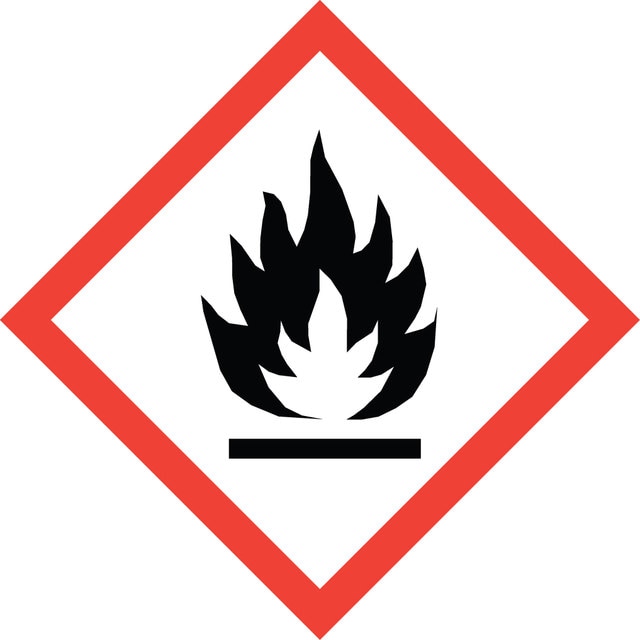
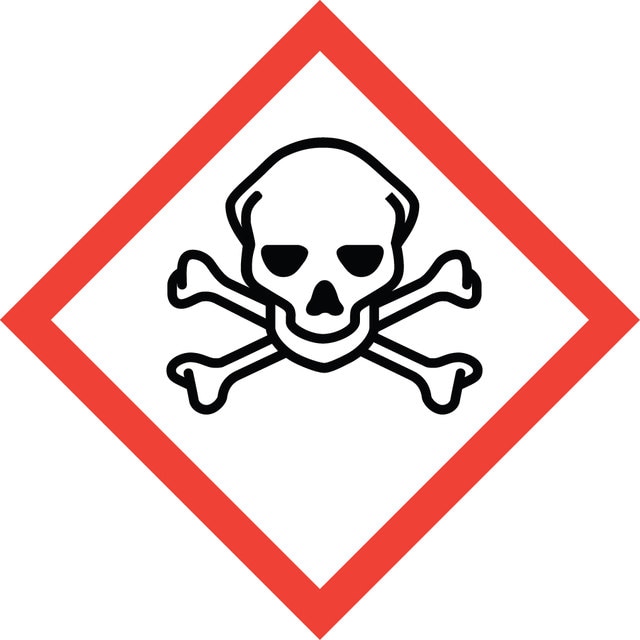
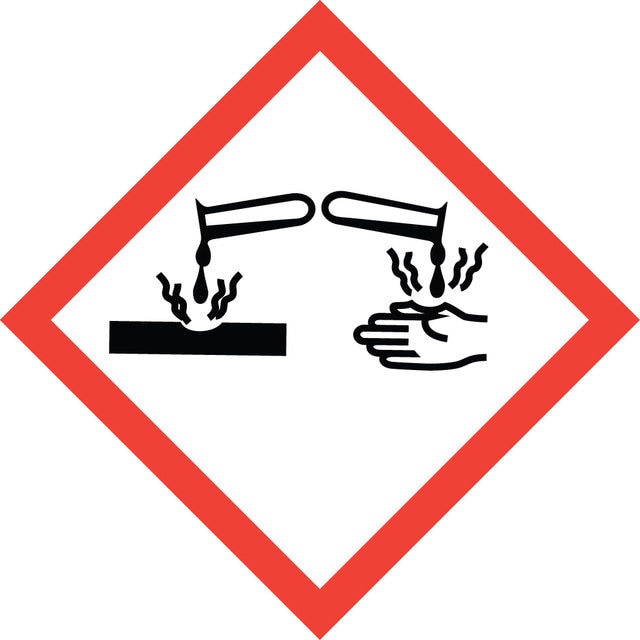
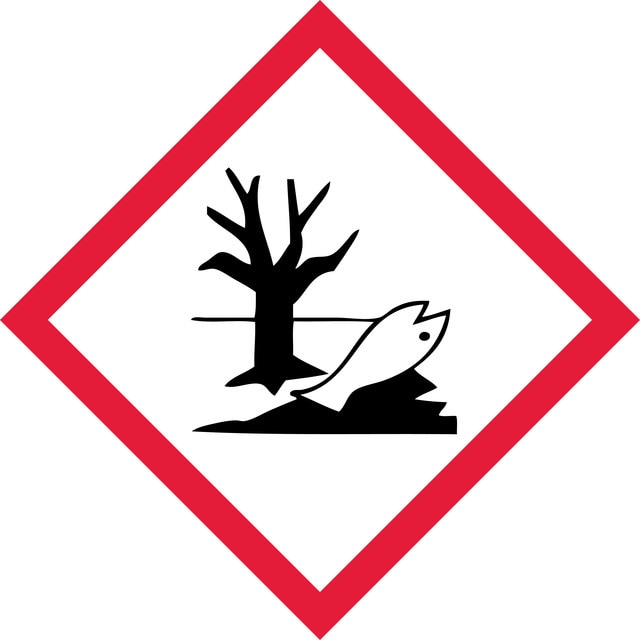
signalword
Danger
Hazard Classifications
Acute Tox. 3 Dermal - Acute Tox. 4 Oral - Aquatic Chronic 2 - Eye Dam. 1 - Flam. Liq. 3 - Skin Corr. 1B - Skin Sens. 1
supp_hazards
저장 등급
3 - Flammable liquids
wgk
WGK 3
flash_point_f
122.0 °F - closed cup
flash_point_c
50 °C - closed cup
ppe
Faceshields, Gloves, Goggles, type ABEK (EN14387) respirator filter
Impact of 2-Vinylpyridine as Electrolyte Additive on Surface and Electrochemistry of Graphite for C/ LiMn2O4 Li-Ion Cells
Komaba S, et al.
Journal of the Electrochemical Society, 152(5), A937-A946 (2005)
A Jurczak et al.
Redox report : communications in free radical research, 22(6), 524-533 (2017-03-16)
The aim of this study was to evaluate the role of the antioxidant barrier in the saliva of children with caries, and its impact on the colonization of cariogenic bacteria. This is a cross-sectional study of 81 children aged 1-5
Vasco Branco et al.
Redox biology, 13, 278-287 (2017-06-11)
Mercury (Hg) compounds target both cysteine (Cys) and selenocysteine (Sec) residues in peptides and proteins. Thus, the components of the two major cellular antioxidant systems - glutathione (GSH) and thioredoxin (Trx) systems - are likely targets for mercurials. Hg exposure
Synthesis of block copolymers of 2-and 4-vinylpyridine by RAFT polymerization
Convertine AJ, et al.
Macromolecules, 36(13), 4679-4681 (2003)
Cytotoxicity and oxidative stress induced by different metallic nanoparticles on human kidney cells.
Igor Pujalté et al.
Particle and fibre toxicology, 8, 10-10 (2011-03-05)
Some manufactured nanoparticles are metal-based and have a wide variety of applications in electronic, engineering and medicine. Until now, many studies have described the potential toxicity of NPs on pulmonary target, while little attention has been paid to kidney which
자사의 과학자팀은 생명 과학, 재료 과학, 화학 합성, 크로마토그래피, 분석 및 기타 많은 영역을 포함한 모든 과학 분야에 경험이 있습니다..
고객지원팀으로 연락바랍니다.