
377430

Allyl isothiocyanate
95%
동의어(들):
AITC, Oil of mustard
조직 및 계약 가격을 보려면 로그인를 클릭합니다.
크기 선택
보기 변경
제품정보 (DICE 배송 시 비용 별도)
Linear Formula:
CH2=CHCH2NCS
CAS 번호:
Molecular Weight:
99.15
PubChem Substance ID:
EC Number:
200-309-2
Beilstein/REAXYS Number:
773748
MDL number:
UNSPSC Code:
12352100
NACRES:
NA.22
Assay:
95%
Form:
liquid
Quality Level
assay
95%
form
liquid
contains
BHT as stabilizer
refractive index
n20/D 1.529 (lit.)
bp
150 °C (lit.)
mp
−80 °C (lit.)
density
1.013 g/mL at 25 °C (lit.)
functional group
amine, isothiocyanate
storage temp.
2-8°C
SMILES string
C=CCN=C=S
InChI
1S/C4H5NS/c1-2-3-5-4-6/h2H,1,3H2
InChI key
ZOJBYZNEUISWFT-UHFFFAOYSA-N
Application
Allyl isothiocyanate (AITC) was suitable for use in the following studies:
- Quantitation of the N-acetylcysteine conjugate of AITC in human urine after ingestion of mustard.
- Evaluation of the fungitoxic activity of AITC vapour on Penicillium expansum on pears, particularly on a thiabendazole (TBZ)-resistant P. expansum strain in vivo, to verify whether AITC treatment could be a substitute for TBZ.
- Study of the induction of acetylation of histone in mouse erythroleukemia cells by some organosulfur compounds.
Biochem/physiol Actions
Naturally occurring constituent of cruciferous vegetables.
Still not finding the right product?
Explore all of our products under Allyl isothiocyanate
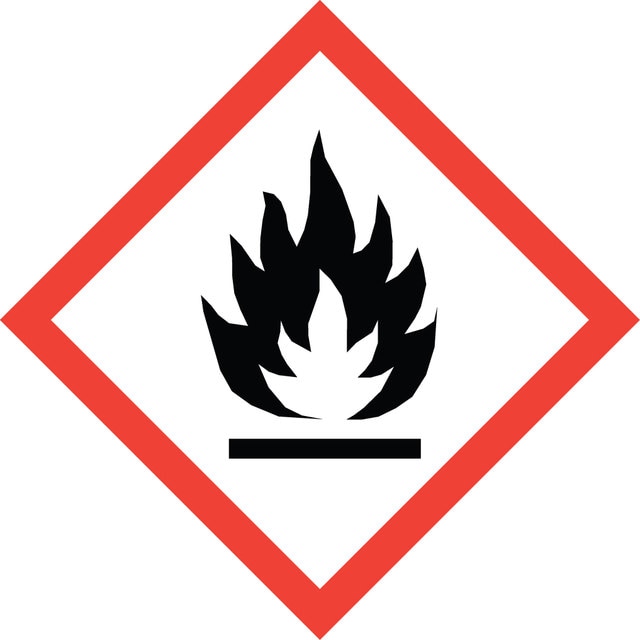


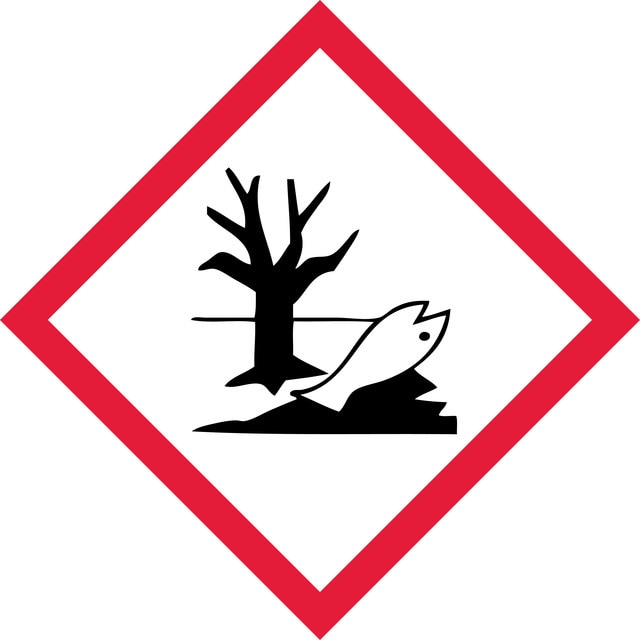
signalword
Danger
Hazard Classifications
Acute Tox. 2 Dermal - Acute Tox. 2 Inhalation - Acute Tox. 4 Oral - Aquatic Acute 1 - Aquatic Chronic 1 - Eye Dam. 1 - Flam. Liq. 3 - Skin Corr. 1B - Skin Sens. 1
저장 등급
3 - Flammable liquids
wgk
WGK 3
flash_point_f
113.0 °F - closed cup
flash_point_c
45 °C - closed cup
Antifungal vapour-phase activity of allyl-isothiocyanate against Penicillium expansum on pears.
Mari M, et al.
Plant Pathology, 51(2), 231-236 (2002)
I M Bruggeman et al.
Toxicology and applied pharmacology, 83(2), 349-359 (1986-04-01)
Ally isothiocyanate has been reported to be a bladder carcinogen in male rats. On the other hand, benzyl isothiocyanate is an anti-carcinogen. These contradicting properties led us to investigate the cytotoxicity of these compounds in RL-4 rat hepatocytes. Since conjugation
Francielle de Vargas Pinheiro et al.
European journal of pharmacology, 747, 105-113 (2014-12-17)
Sympathetic fibres maintain some forms of neuropathic pain, but the underlying mechanisms are poorly understood. Therefore, this study investigated the possible involvement of transient receptor potential ankyrin 1 (TRPA1) and the role of the sympathetic nervous system (involved in sympathetically