
655201

PEDOT:PSS

high-conductivity grade, 3.0-4.0% aqueous dispersion
동의어(들):
PEDOT:PSS, Poly(2,3-dihydrothieno-1,4-dioxin)-poly(styrenesulfonate)
제품 이름
Poly(3,4-ethylenedioxythiophene)-poly(styrenesulfonate), 3.0-4.0% in H2O, high-conductivity grade
description
Electrodes
greener alternative product characteristics
Design for Energy Efficiency
Learn more about the Principles of Green Chemistry.
sustainability
Greener Alternative Product
concentration
3.0-4.0% in H2O
resistance
1500 Ω/sq, 4 point probe measurement of dried coating based on initial 6μm wet thickness., 500 Ω/sq, 4 point probe measurement of dried coating based on initial 18μm wet thickness.
pH
1.5-2.5 (25 °C, dried coatings)
conductivity
>200 S/cm
viscosity
10-30 cP(20 °C)
density
1.011 g/cm3 (dried coatings)
greener alternative category
storage temp.
2-8°C
Quality Level
유사한 제품을 찾으십니까? 방문 제품 비교 안내
General description
Application
Packaging
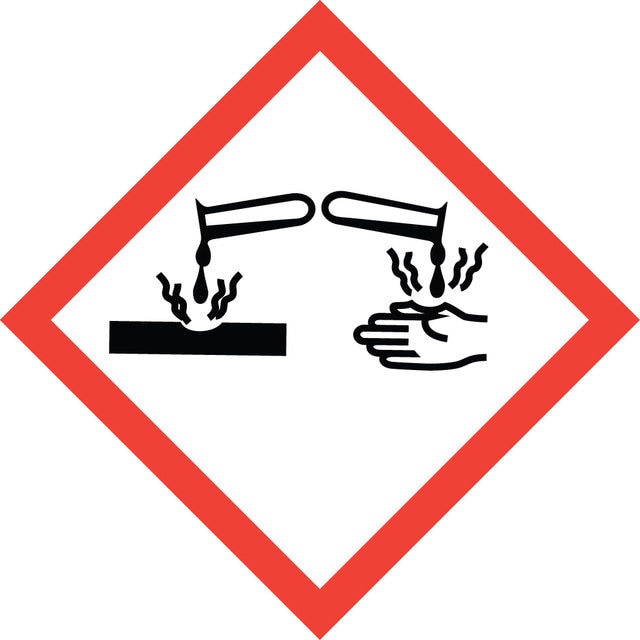
signalword
Danger
hcodes
Hazard Classifications
Eye Dam. 1 - Skin Corr. 1
저장 등급
8B - Non-combustible corrosive hazardous materials
wgk
WGK 3
ppe
Faceshields, Gloves, Goggles, type ABEK (EN14387) respirator filter
문서
The application of conducting polymers at the interface with biology is an exciting new trend in organic electronics research.
Conducting polymers such as polyaniline, polythiophene and polyfluorenes are now much in the spotlight for their applications in organic electronics and optoelectronics.
Advancements in bioelectronics, incorporating self-healing materials for wearable devices, and measuring bioelectric signals to assess physiological parameters.
Progress in solution-processed functional materials leads to thin-film optoelectronic devices for industrial and consumer electronics.
관련 콘텐츠
Learn from leading experts about the evolution of PSCs, key material advancements, and innovative strategies to tackle current challenges.
자사의 과학자팀은 생명 과학, 재료 과학, 화학 합성, 크로마토그래피, 분석 및 기타 많은 영역을 포함한 모든 과학 분야에 경험이 있습니다..
고객지원팀으로 연락바랍니다.