
708976

Chloroform solution
suitable for NMR (reference standard), 3% in acetone-d6 (99.9 atom % D)
조직 및 계약 가격을 보려면 로그인를 클릭합니다.
크기 선택
보기 변경
제품정보 (DICE 배송 시 비용 별도)
Form:
solution
form
solution
Quality Level
concentration
3% in acetone-d6 (99.9 atom % D)
technique(s)
NMR: suitable
NMR tube size
5 mm × 7 in. , 5 mm × 8 in.
suitability
suitable for NMR (reference standard)
SMILES string
ClC(Cl)Cl
InChI
1S/CHCl3/c2-1(3)4/h1H
InChI key
HEDRZPFGACZZDS-UHFFFAOYSA-N
Features and Benefits
1H line shape
Preparation Note
5 mm O.D. tube contains 0.700 mL.
Still not finding the right product?
Explore all of our products under Chloroform solution
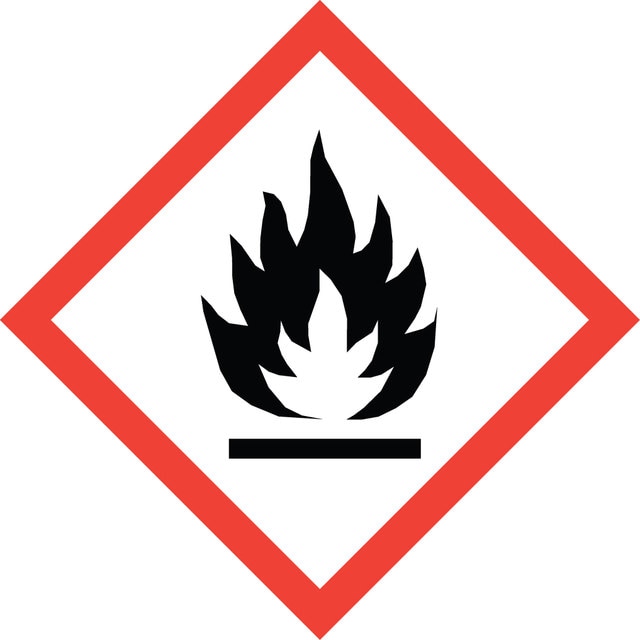


signalword
Danger
Hazard Classifications
Carc. 2 - Eye Irrit. 2 - Flam. Liq. 2 - Repr. 2 - STOT RE 2 Oral - STOT SE 3
target_organs
Central nervous system, Liver,Kidney
supp_hazards
저장 등급
3 - Flammable liquids
wgk
WGK 3
flash_point_f
1.4 °F
flash_point_c
-17 °C
ppe
Eyeshields, Faceshields, Gloves
Matteo Serino et al.
PloS one, 6(6), e21184-e21184 (2011-06-24)
Daily variations in lipid concentrations in both gut lumen and blood are detected by specific sensors located in the gastrointestinal tract and in specialized central areas. Deregulation of the lipid sensors could be partly involved in the dysfunction of glucose
Dennis J Pelletier et al.
Journal of chemical information and modeling, 47(3), 1196-1205 (2007-04-13)
The identification of phospholipidosis (PPL) during preclinical testing in animals is a recognized problem in the pharmaceutical industry. Depending on the intended indication and dosing regimen, PPL can delay or stop development of a compound in the drug discovery process.
Ilaria Massarelli et al.
European journal of medicinal chemistry, 44(9), 3658-3664 (2009-03-11)
A dataset comprising 55 chemicals with hepatocarcinogenic potency indices was collected from the Carcinogenic Potency Database with the aim of developing QSAR models enabling prediction of the above unwanted property for New Chemical Entities. The dataset was rationally split into