
736171

1,4-Dioxane solution
suitable for NMR (reference standard), 40% in benzene-d6 (99.6 atom % D), NMR tube size 5 mm × 8 in.
조직 및 계약 가격을 보려면 로그인를 클릭합니다.
크기 선택
보기 변경
제품정보 (DICE 배송 시 비용 별도)
실험식(Hill 표기법):
C4H8O2
CAS 번호:
Molecular Weight:
88.11
NACRES:
NA.24
PubChem Substance ID:
UNSPSC Code:
12142201
MDL number:
grade
analytical standard
Quality Level
concentration
40% in benzene-d6 (99.6 atom % D)
technique(s)
NMR: suitable
NMR tube size
5 mm × 8 in.
NMR tube wall thickness
0.24 mm , ultra-thin wall
suitability
suitable for NMR (reference standard)
format
single component solution
SMILES string
C1COCCO1
InChI
1S/C4H8O2/c1-2-6-4-3-5-1/h1-4H2
InChI key
RYHBNJHYFVUHQT-UHFFFAOYSA-N
General description
This compound is listed in the SVHC (Substances of very high concern) candidate list of ECHA (European Chemicals Agency)
Features and Benefits
13C sensitivity
Preparation Note
5 mm O.D. tube contains 0.700 mL.
Still not finding the right product?
Explore all of our products under 1,4-Dioxane solution
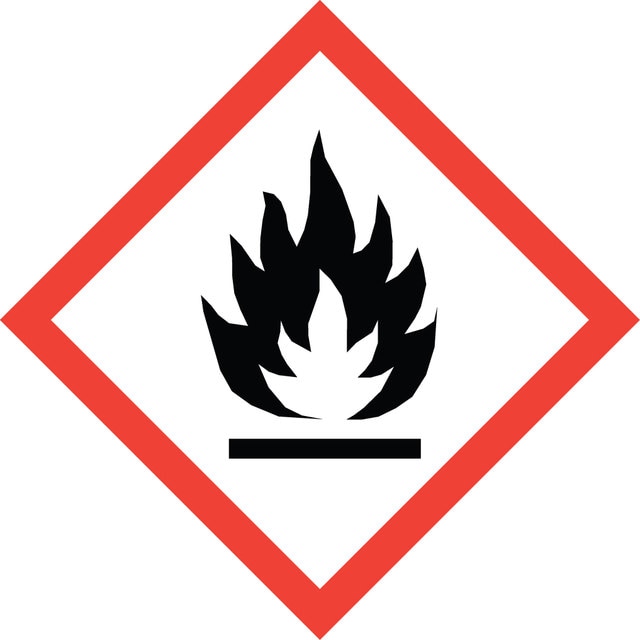


signalword
Danger
Hazard Classifications
Aquatic Chronic 3 - Asp. Tox. 1 - Carc. 1A - Eye Irrit. 2 - Flam. Liq. 2 - Muta. 1B - Skin Irrit. 2 - STOT RE 1 - STOT SE 3
target_organs
Blood, Respiratory system
supp_hazards
저장 등급
3 - Flammable liquids
wgk
WGK 3
flash_point_f
53.6 °F - closed cup
flash_point_c
12 °C - closed cup
문서
NMR reference standards ensure proper instrument performance. Review key operational parameters for these standards such as pw90, sensitivity, resolution and line shape.
Daniel Gerrity et al.
Water research, 46(19), 6257-6272 (2012-10-16)
The performance of ozonation in wastewater depends on water quality and the ability to form hydroxyl radicals (·OH) to meet disinfection or contaminant transformation objectives. Since there are no on-line methods to assess ozone and ·OH exposure in wastewater, many
Venkateshwarlu Gurram et al.
Chemistry, an Asian journal, 7(8), 1853-1861 (2012-05-10)
Reaction conditions for the CC cross-coupling of O(6)-alkyl-2-bromo- and 2-chloroinosine derivatives with aryl-, hetaryl-, and alkylboronic acids were studied. Optimization experiments with silyl-protected 2-bromo-O(6)-methylinosine led to the identification of [PdCl(2)(dcpf)]/K(3)PO(4) in 1,4-dioxane as the best conditions for these reactions (dcpf=1,1'-bis(dicyclohexylphosphino)ferrocene).
A Pan et al.
Langmuir : the ACS journal of surfaces and colloids, 28(39), 13830-13843 (2012-09-07)
Mixed aquo-organic solvents are used in chemical, industrial, and pharmaceutical processes along with amphiphilic materials. Their fundamental studies with reference to bulk and interfacial phenomena are thus considered to be important, but such detailed studies are limited. In this work