
V3700

Divinyl sulfone
contains hydroquinone as inhibitor, ≥96%
동의어(들):
Vinyl sulfone
조직 및 계약 가격을 보려면 로그인를 클릭합니다.
크기 선택
보기 변경
제품정보 (DICE 배송 시 비용 별도)
Linear Formula:
(CH2=CH)2SO2
CAS 번호:
Molecular Weight:
118.15
UNSPSC Code:
12162002
NACRES:
NA.23
PubChem Substance ID:
EC Number:
201-057-6
Beilstein/REAXYS Number:
1071329
MDL number:
Quality Level
assay
≥96%
contains
hydroquinone as inhibitor
refractive index
n20/D 1.476 (lit.)
bp
234 °C (lit.)
mp
−26 °C (lit.)
density
1.177 g/mL at 25 °C (lit.)
storage temp.
2-8°C
SMILES string
C=CS(=O)(=O)C=C
InChI
1S/C4H6O2S/c1-3-7(5,6)4-2/h3-4H,1-2H2
InChI key
AFOSIXZFDONLBT-UHFFFAOYSA-N
Gene Information
human ... LOC129293(129293)
General description
Divinyl sulfone is a highly reactive chemical compound due to the presence of two vinyl groups, which make it an effective cross-linking agent and bifunctional reactive compound. It is used in the production of hydrogels, resins, and other polymeric materials. The resulting cross-linked polymers exhibit enhanced mechanical strength, stability, and insolubility in solvents.
Application
Divinyl sulfone can be used as:
DVS and its mono and di-substituted derivatives are useful starting materials in the preparation of thiomorpholine 1,1-dioxides and other synthetically important macro- and the heterocycles.
DVS may be used to shrink proofing cotton by crosslinking it with cellulose.
- A cross-linking agent to synthesize divinyl sulfone-crosslinked hyaluronic acid hydrogels for specific biomedical applications, such as tissue engineering or drug delivery.
- A cross-linking agent to develop the conducting polymer film with MXene layers. This crosslinking can enhance the mechanical properties and stability of the composite film.
DVS and its mono and di-substituted derivatives are useful starting materials in the preparation of thiomorpholine 1,1-dioxides and other synthetically important macro- and the heterocycles.
DVS may be used to shrink proofing cotton by crosslinking it with cellulose.
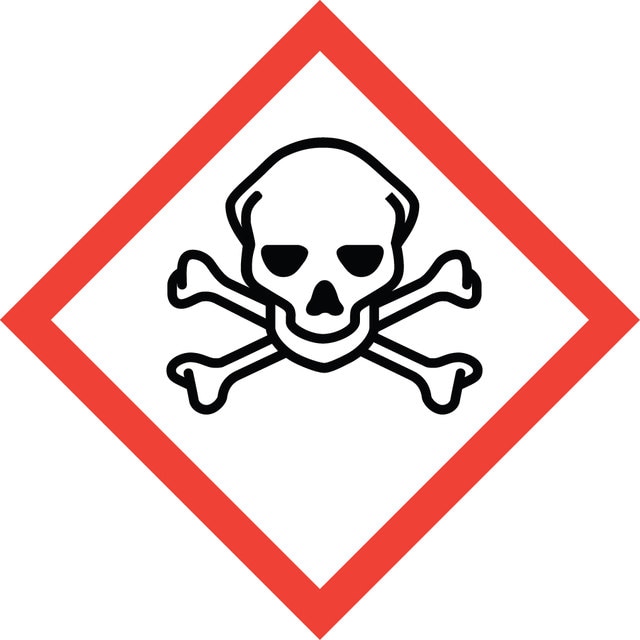
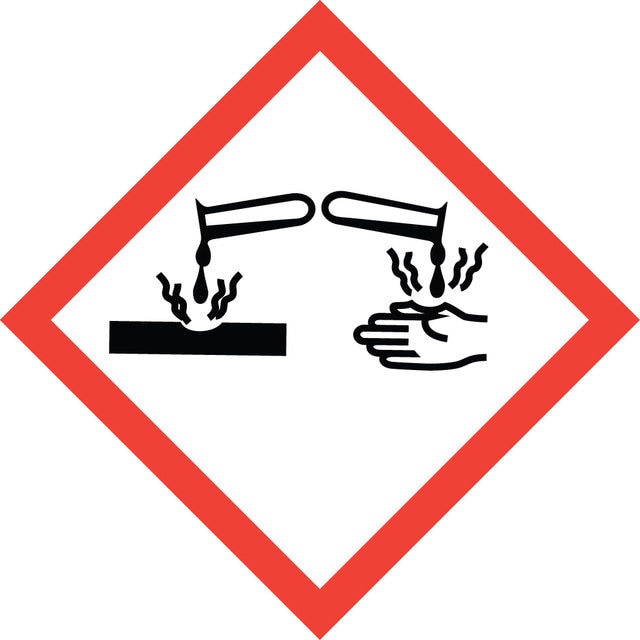
signalword
Danger
Hazard Classifications
Acute Tox. 1 Dermal - Acute Tox. 2 Oral - Aquatic Chronic 3 - Eye Dam. 1 - Skin Irrit. 2 - STOT SE 3
target_organs
Respiratory system
저장 등급
6.1A - Combustible acute toxic Cat. 1 and 2 / very toxic hazardous materials
wgk
WGK 3
flash_point_f
215.6 °F - closed cup
flash_point_c
102 °C - closed cup
ppe
Faceshields, Gloves, Goggles, type ABEK (EN14387) respirator filter
Tobias Käppler et al.
Biotechnology and bioengineering, 102(2), 535-545 (2008-08-30)
A new approach for in situ product removal from bioreactors is presented in which high-gradient magnetic separation is used. This separation process was used for the adsorptive removal of proteases secreted by Bacillus licheniformis. Small, non-porous bacitracin linked magnetic adsorbents
Jin Woo Park et al.
Bioconjugate chemistry, 23(3), 350-362 (2012-01-17)
Novel vinylsulfone cyanine dyes (em. 550-850 nm) were designed and synthesized for fluorescent labeling of biomolecules via 1,2-addition reaction in aqueous conditions. Due to the virtue of chemical structures of both fluorophore and reactive group, these dyes could be significantly
Yan Li et al.
Biomaterials, 33(27), 6533-6541 (2012-06-19)
Effective delivery of DNA to direct cell behavior in a well defined three dimensional scaffold offers a superior approach in tissue engineering. In this study, we synthesized biodegradable nanostructured hydrogels with tunable physical properties for cell and gene delivery. The