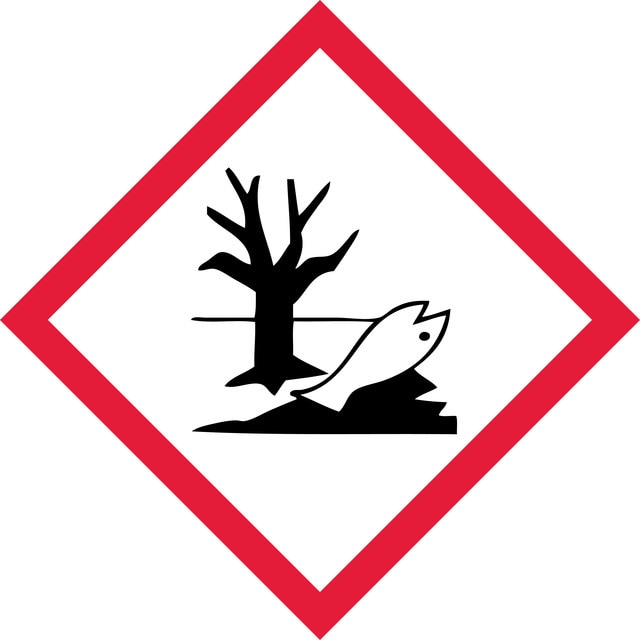
조직 및 계약 가격을 보려면 로그인를 클릭합니다.
크기 선택
보기 변경
제품정보 (DICE 배송 시 비용 별도)
Linear Formula:
2-[(CH3)2CH]C6H3-5-(CH3)OH
CAS 번호:
Molecular Weight:
150.22
FEMA Number:
3066
Council of Europe no.:
174
UNSPSC Code:
12164502
PubChem Substance ID:
NACRES:
NA.21
EC Number:
201-944-8
Flavis number:
4.006
MDL number:
Beilstein/REAXYS Number:
1907135
Organoleptic:
spicy; phenolic
Grade:
FG, Halal, Kosher
Biological source:
synthetic
Agency:
meets purity specifications of JECFA
Food allergen:
no known allergens
biological source
synthetic
Quality Level
grade
FG, Halal, Kosher
agency
meets purity specifications of JECFA
reg. compliance
EU Regulation 1334/2008 & 872/2012, FCC, FDA 21 CFR 172.515
vapor pressure
1 mmHg ( 64 °C)
bp
232 °C (lit.)
mp
48-51 °C (lit.)
density
0.965 g/mL at 25 °C (lit.)
application(s)
flavors and fragrances
documentation
see Safety & Documentation for available documents
food allergen
no known allergens
organoleptic
spicy; phenolic
SMILES string
CC(C)c1ccc(C)cc1O
InChI
1S/C10H14O/c1-7(2)9-5-4-8(3)6-10(9)11/h4-7,11H,1-3H3
InChI key
MGSRCZKZVOBKFT-UHFFFAOYSA-N
General description
Thymol is a monoterpene phenol derivative. It is a key volatile aroma constituent of the essential oil of plants such as thyme, basil, and oregano. It has strong antioxidant, antibacterial, anticarcinogenesis, anti-inflammatory, and antiseptic properties.
Application
Thymol can be used as a natural additive in different products such as food, cosmetics, and nutriceuticals.
Biochem/physiol Actions
Taste at 5 ppm
Other Notes
Natural occurrence: Buchu oil grapefruit oil, blackberry, and licorice.
Disclaimer
The product is not intended for use as a biocide under global biocide regulations, including but not limited to US EPA′s Federal Insecticide Fungicide and Rodenticide Act, European Biocidal Products Regulation, Canada’s Pest Management Regulatory Agency, Turkey’s Biocidal Products Regulation, Korea’s Consumer Chemical Products and Biocide Safety Management Act (K-BPR) and others.
Still not finding the right product?
Explore all of our products under Thymol
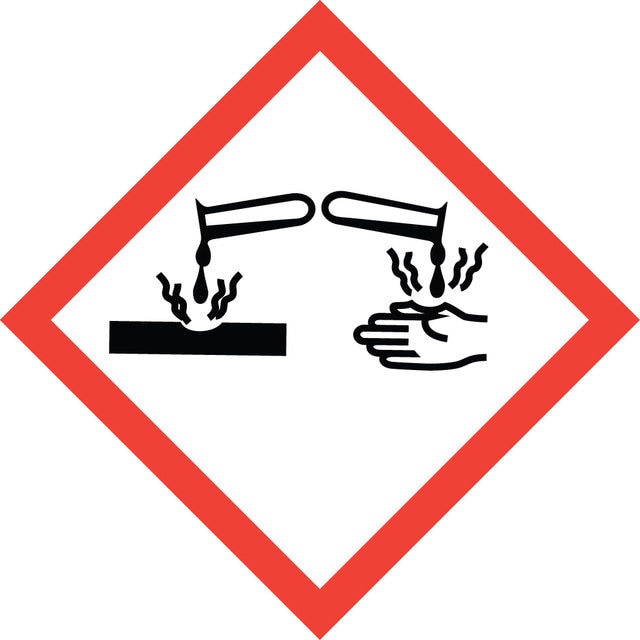
signalword
Danger
hcodes
Hazard Classifications
Acute Tox. 4 Oral - Aquatic Chronic 2 - Eye Dam. 1 - Skin Corr. 1B
저장 등급
8A - Combustible corrosive hazardous materials
wgk
WGK 2
flash_point_f
240.8 °F - closed cup
flash_point_c
116 °C - closed cup
ppe
dust mask type N95 (US), Eyeshields, Faceshields, Gloves, type P3 (EN 143) respirator cartridges
Antioxidant actions of thymol, carvacrol, 6-gingerol, zingerone and hydroxytyrosol.
Aeschbach R, et al.
Food And Chemical Toxicology, 32(1), 31-36 (1994)
A study of the minimum inhibitory concentration and mode of action of oregano essential oil, thymol and carvacrol.
Lambert RJW, et al.
Journal of Applied Microbiology, 91(3), 453-462 (2001)
S P Lee et al.
British journal of pharmacology, 153(8), 1739-1749 (2008-03-13)
Thymol, a major component of thyme and oregano, has medical uses in oral care products as an astringent and antibiotic. Its distinctive sharp odour and pungent flavour are considered aversive properties. The molecular basis of these aversive properties is not