
usage
sufficient for ≤1,000 tests
manufacturer/tradename
Roche
technique(s)
ELISA: suitable
detection method
colorimetric
storage temp.
2-8°C
General description
Colorimetric immunoassay for the quantification of cell proliferation, based on the measurement of BrdU incorporation during DNA synthesis: a nonradioactive alternative to the [3H]-thymidine incorporation assay.
Application
For research use only. Not for use in diagnostic procedures.
The Cell Proliferation ELISA, BrdU (colorimetric) belongs to the second, improved generation of kits for measuring DNA synthesis. It is a precise, fast, and simple colorimetric alternative to quantitate cell proliferation based on the measurement of BrdU incorporation during DNA synthesis in replicating (cycling) cells. Thus, the Cell Proliferation ELISA can be used in many different in vitro cell systems. For example:
The Cell Proliferation ELISA, BrdU (colorimetric) belongs to the second, improved generation of kits for measuring DNA synthesis. It is a precise, fast, and simple colorimetric alternative to quantitate cell proliferation based on the measurement of BrdU incorporation during DNA synthesis in replicating (cycling) cells. Thus, the Cell Proliferation ELISA can be used in many different in vitro cell systems. For example:
- Detection and quantification of cell proliferation induced by growth factors and cytokines
- Determination of the inhibitory or stimulatory effects of various compounds on cell proliferation in environmental and biomedical research, and in the food, cosmetic, and pharmaceutical industries
- Measurement of the immunoreactivity of lymphocytes, stimulated by mitogens or antigens
- Analysis of the chemosensitivity of tumor cells to different cytostatic drugs in medical research
- Testing of biocompatibility of various scaffolds, employed in bone tissue engineering, for bone cell growth
Biochem/physiol Actions
The antibody conjugate reacts with the thymidine analogue 5-bromo-2′-deoxyuridine (BrdU) and with BrdU incorporated into DNA. For binding to BrdU incorporated into the DNA, the BrdU-labeled DNA has to be denatured. The antibody does not cross-react with any endogenous cellular components such as thymidine, uridine, or DNA.
Packaging
1 kit containing 6 components.
Preparation Note
Working concentration: The kit antibody (Anti-BrdU-peroxidase) has, after reconstitution, a concentration of 7.5 U/ml, after dilution 0.075 U/ml. Instead of the kit antibody, you can also use the Anti-BrdU-Antibody, Fab fragments.This antibody is double-concentrated, so you have to dilute it after reconstitution in 1 ml with 1:200.
Working solution: BrdU labeling solution
Dilute BrdU labeling reagent 1:100 with sterile culture medium (resulting concentration: 100 μM BrdU).
For one 96-well MP, 1 ml BrdU labeling solution is required if the cells were cultured in 100 μl /well (10 μl/well) and 2 ml BrdU labeling solution is required if the cells were cultured in 200 μl/well (20 μl/well).
Anti-BrdU-peroxidase stock solution
Dissolve Anti-BrdU-peroxidase in 1.1 ml double-dist. water for 10 minutes and mix thoroughly.
Anti-BrdU-peroxidase working solution
Dilute Anti-BrdU-peroxidase stock solution 1:100 with antibody dilution solution. For one 96-well MP dilute 100 μl Anti-BrdU-peroxidase stock solution in 10 ml antibody dilution solution
Washing solution
Dilute Washing buffer concentrate 1:10 with double-dist. water.
For one 96-well MP dilute 10 ml Washing buffer concentrate with 90 ml double-dist. water.
Storage conditions (working solution): BrdU labeling solution
The undiluted BrdU labeling reagent (1000x): At 2 to 8 °C for several months protected from light.
The diluted BrdU labeling reagent: At 2 to 8 °C stable for several weeks. Store protected from light. For long-term storage it is recommended to store the BrdU labeling solution in aliquots at -15 to -25 °C.
Anti-BrdU-peroxidase stock solution
At 2 to 8 °C for several months. For long-term storage it is recommended to store the solution in aliquots at -15 to -25 °C.
Anti-BrdU-peroxidase working solution
Prepare shortly before use. Do not store.
Washing solution
At 2 to 8 °C for several weeks.
Working solution: BrdU labeling solution
Dilute BrdU labeling reagent 1:100 with sterile culture medium (resulting concentration: 100 μM BrdU).
For one 96-well MP, 1 ml BrdU labeling solution is required if the cells were cultured in 100 μl /well (10 μl/well) and 2 ml BrdU labeling solution is required if the cells were cultured in 200 μl/well (20 μl/well).
Anti-BrdU-peroxidase stock solution
Dissolve Anti-BrdU-peroxidase in 1.1 ml double-dist. water for 10 minutes and mix thoroughly.
Anti-BrdU-peroxidase working solution
Dilute Anti-BrdU-peroxidase stock solution 1:100 with antibody dilution solution. For one 96-well MP dilute 100 μl Anti-BrdU-peroxidase stock solution in 10 ml antibody dilution solution
Washing solution
Dilute Washing buffer concentrate 1:10 with double-dist. water.
For one 96-well MP dilute 10 ml Washing buffer concentrate with 90 ml double-dist. water.
Storage conditions (working solution): BrdU labeling solution
The undiluted BrdU labeling reagent (1000x): At 2 to 8 °C for several months protected from light.
The diluted BrdU labeling reagent: At 2 to 8 °C stable for several weeks. Store protected from light. For long-term storage it is recommended to store the BrdU labeling solution in aliquots at -15 to -25 °C.
Anti-BrdU-peroxidase stock solution
At 2 to 8 °C for several months. For long-term storage it is recommended to store the solution in aliquots at -15 to -25 °C.
Anti-BrdU-peroxidase working solution
Prepare shortly before use. Do not store.
Washing solution
At 2 to 8 °C for several weeks.
The working solution for the antibody should be phosphate buffered saline containing 1% BSA, pH 7.4
Other Notes
For life science research only. Not for use in diagnostic procedures.
키트 구성품 전용
제품 번호
설명
- BrdU Labeling Reagent
- FixDenat ready-to-use
- Anti-BrdU-peroxidase antibody
- Antibody Dilution Solution ready-to-use
- Washing Buffer PBS 10x concentrated
- Substrate Solution TMB ready-to-use
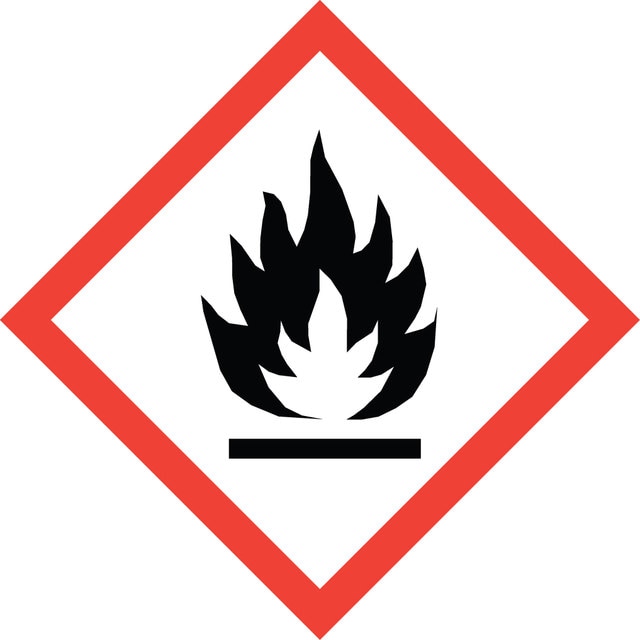


signalword
Danger
hcodes
Hazard Classifications
Eye Irrit. 2 - Flam. Liq. 2 - Muta. 1B - Skin Sens. 1
저장 등급
3 - Flammable liquids
wgk
WGK 1
프로토콜
Cell Proliferation ELISA, BrdU (colorimetric) Protocol & Troubleshooting
문서
Cell based assays for cell proliferation (BrdU, MTT, WST1), cell viability and cytotoxicity experiments for applications in cancer, neuroscience and stem cell research.
Cell cycle regulates vital processes like DNA repair, cancer prevention. Four stages: G1, S, G2, M. NTPs don't permeate membranes.
암, 신경과학 및 줄기세포 연구에 응용할 수 있는 세포 증식(BrdU, MTT, WST1), 세포 생존력 및 세포 독성 실험을 위한 세포 기반 분석입니다.
Lutz Wollin et al.
The Journal of pharmacology and experimental therapeutics, 349(2), 209-220 (2014-02-22)
The tyrosine kinase inhibitor nintedanib (BIBF 1120) is in clinical development for the treatment of idiopathic pulmonary fibrosis. To explore its mode of action, nintedanib was tested in human lung fibroblasts and mouse models of lung fibrosis. Human lung fibroblasts
Yanqing Gong et al.
Oncotarget, 6(28), 25856-25867 (2015-08-28)
The coiled coil is a superhelical structural protein motif involved in a diverse array of biological functions, and the abnormal expression of the coiled-coil domain containing proteins has a direct link with the phenotype of tumor cell migration, invasion and
Jia-Ang Shi et al.
International journal of molecular medicine, 34(1), 237-243 (2014-04-24)
It is known that microRNA-219 (miR-219) expression is downregulated in medulloblastoma. In the present study, we investigated the expression, targets and functional effects of miR-219 in D283-MED medulloblastoma cells. We first demonstrated that miR-219 not only inhibits proliferation, but also