콘텐츠로 건너뛰기
Merck

XTG9-RO

Roche

X-tremeGENE 9 DNA Transfection Reagent

Polymer reagent for transfecting common cell lines

동의어(들):

transfection reagent

조직 및 계약 가격을 보려면 로그인를 클릭합니다.

크기 선택


제품정보 (DICE 배송 시 비용 별도)

NACRES:
NA.55
UNSPSC Code:
41106502
기술 서비스
도움이 필요하신가요? 저희 숙련된 과학자 팀이 도와드리겠습니다.
도움 문의
기술 서비스
도움이 필요하신가요? 저희 숙련된 과학자 팀이 도와드리겠습니다.
도움 문의

grade

Molecular Biology

form

liquid (aqueous solution)

usage

1 mL (suitable for 165 transfections)

packaging

pkg of 0.4 mL (06365779001), pkg of 1.0 mL (06365787001), pkg of 5 × 1.0 mL (06365809001)

manufacturer/tradename

Roche

technique(s)

transfection: suitable

storage temp.

2-8°C

General description

X-tremeGENE 9 DNA Transfection Reagent is a proprietary blend of lipids and other components supplied in 80% ethanol, filtered through 0.2 μm pore size membrane, and packaged in glass vials.

Application

X-tremeGENE 9 DNA Transfection Reagent is a non-liposomal multi-component reagent for experiments involving cellular analysis. Due to its extremely low cytotoxicity, minimal need for optimization, and the ability to provide high transfection efficiency in a wide range of commonly used cell lines even in the presence of serum, it is well suited for applications in all fields of cellular analysis.

X-tremeGENE 9 DNA Transfection Reagent is well suited for cellular analysis applications such as:
  • Expression of recombinant proteins for functional analysis.
  • Physiological studies of metabolic pathways.
  • Analysis of regulatory sequences using reporter gene assays.
  • Gene expression assays.
  • Cancer research studies.
  • Target evaluation.

Features and Benefits

  • Generate physiologically relevant results using a reagent with extremely low cytotoxicity for maximum post-transfection cell viability.
  • Save time and eliminate multiple handling steps; simply dilute X-tremeGENE 9 DNA Transfection Reagent, incubate with plasmid DNA, and pipet the mixture directly onto your cells (with or without serum).
  • Avoid time-consuming optimization procedures in commonly used cell lines.

Physical form

Supplied in 80% ethanol and sterile-filtered through 0.2 μm pore size membrane.Number of Tests: Using the standard procedure, 1 ml of X-tremeGENE 9 DNA Transfection Reagent can be used to perform up to 6,600 transfections in 96-well plates using 3:1 ratio and up to 10,000 transfections using 2:1 ratio.

Analysis Note

Each lot of X-tremeGENE 9 DNA Transfection Reagent is carefully tested following established quality procedures to ensure that the product is consistently performing according to specifications. During quality testing, cells are transfected with a reporter gene vector DNA using X-tremeGENE 9 DNA Transfection Reagent (ratio 3:1 μl/μg DNA). Reporter gene activity is monitored via chemiluminescent detection. Using a standard curve, the total amount of recombinant protein is determined per well in order to meet specification.

Other Notes

For life science research only. Not for use in diagnostic procedures.

Legal Information

X-tremeGENE is a trademark of Roche

pictograms

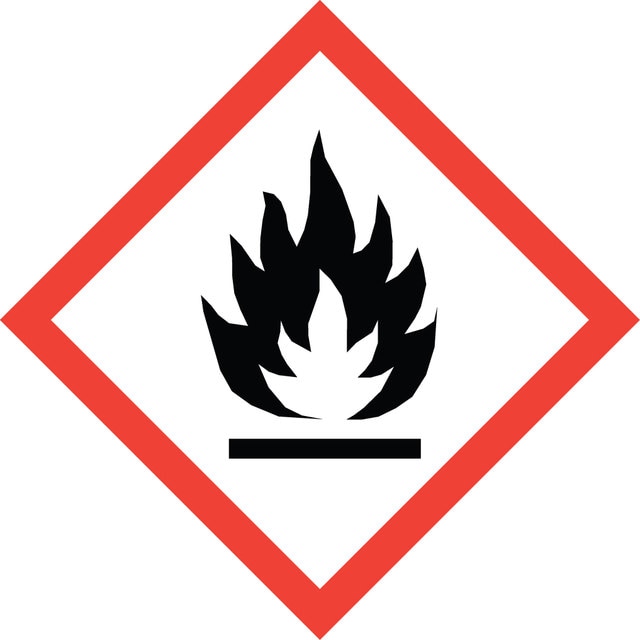
FlameExclamation mark

signalword

Danger

Hazard Classifications

Eye Irrit. 2 - Flam. Liq. 2

저장 등급

3 - Flammable liquids

wgk

WGK 1

flash_point_f

334.4 °F

flash_point_c

168 °C


가장 최신 버전 중 하나를 선택하세요:

시험 성적서(COA)

Lot/Batch Number

적합한 버전을 찾을 수 없으신가요?

특정 버전이 필요한 경우 로트 번호나 배치 번호로 특정 인증서를 찾을 수 있습니다.

이 제품을 이미 가지고 계십니까?

문서 라이브러리에서 최근에 구매한 제품에 대한 문서를 찾아보세요.

문서 라이브러리 방문

Leonardo Freire-de-Lima et al.
Proceedings of the National Academy of Sciences of the United States of America, 108(43), 17690-17695 (2011-10-19)
The process termed "epithelial-mesenchymal transition" (EMT) was originally discovered in ontogenic development, and has been shown to be one of the key steps in tumor cell progression and metastasis. Recently, we showed that the expression of some glycosphingolipids (GSLs) is
L C Costantini et al.
Neuroscience, 89(2), 505-513 (1999-03-17)
To investigate the role of neurotrophins in the initial formation of striatal patch versus matrix, the spatial and temporal expression of trkB receptors was examined using immunohistochemistry. Polyclonal antibodies, against the C-terminus or the tyrosine kinase domain, revealed trkB-immunoreactive cells
Piroon Jenjaroenpun et al.
BMC genomics, 10 Suppl 3, S9-S9 (2010-01-09)
DNA triplexes can naturally occur, co-localize and interact with many other regulatory DNA elements (e.g. G-quadruplex (G4) DNA motifs), specific DNA-binding proteins (e.g. transcription factors (TFs)), and micro-RNA (miRNA) precursors. Specific genome localizations of triplex target DNA sites (TTSs) may
Lauren Rouleau et al.
Free radical biology & medicine, 95, 308-322 (2016-04-03)
We investigated the mechanism of selective ascorbate-induced cytotoxicity in tumor cells, including Hep G2 cells, compared to primary hepatocytes. H2O2 formation was required for ascorbate cytotoxicity, as extracellular catalase treatment protected tumor cells. H2O2 generated by glucose oxidase treatment also
Daniel F Comiskey et al.
Nucleic acids research, 43(8), 4202-4218 (2015-04-08)
Genotoxic stress induces alternative splicing of the oncogene MDM2 generating MDM2-ALT1, an isoform attributed with tumorigenic properties. However, the mechanisms underlying this event remain unclear. Here we explore MDM2 splicing regulation by utilizing a novel minigene that mimics endogenous MDM2

문서

Transfection introduces genetic material into cells, aiding research in gene expression and cell biology.

Small inhibitory RNAs offer easy gene expression knockdown in mammalian cells, revolutionizing gene research.

Automation is used for many applications to reduce variation caused by manual handling and to obtain reproducible results in high-throughput assays. High-throughput applications, such as knockdown studies or target screenings, often include cell transfection.

Genetic engineering enables large-scale expression and isolation of recombinant proteins for research purposes.

모두 보기

프로토콜

Protocols for Transfecting Common Cell Lines with X-tremeGENE™ Transfection Reagents

Transient co-transfection of plasmids for cellular studies in protein interaction, transcription factor, and gene knockdown analyses.

Plate cells approx. 24 hours before transfection making sure cells are at optimal concentration (70 – 90 % confluency).

Cell preparation for transfection Plate cells approx. 24 hours before transfection making sure cells are at optimal concentration (70 – 90 % confluency).

관련 콘텐츠

Browse our convenient transfection reagent selection guide to match the best reagent for your specific cell line and application needs.

자사의 과학자팀은 생명 과학, 재료 과학, 화학 합성, 크로마토그래피, 분석 및 기타 많은 영역을 포함한 모든 과학 분야에 경험이 있습니다..

고객지원팀으로 연락바랍니다.