
204722

Tin(II) chloride
≥99.99% trace metals basis
동의어(들):
Stannous chloride
조직 및 계약 가격을 보려면 로그인를 클릭합니다.
크기 선택
제품정보 (DICE 배송 시 비용 별도)
Linear Formula:
SnCl2
CAS 번호:
Molecular Weight:
189.62
PubChem Substance ID:
eCl@ss:
38140204
UNSPSC Code:
12352302
NACRES:
NA.21
EC Number:
231-868-0
MDL number:
Assay:
≥99.99% trace metals basis
Form:
crystalline powder, flakes
InChI key
AXZWODMDQAVCJE-UHFFFAOYSA-L
InChI
1S/2ClH.Sn/h2*1H;/q;;+2/p-2
SMILES string
Cl[SnH2]Cl
vapor pressure
33 hPa (~429 °C)
assay
≥99.99% trace metals basis
form
crystalline powder, flakes
reaction suitability
reagent type: catalyst
core: tin
pH
2.18 (20 °C)
bp
652 °C (lit.)
mp
246 °C (lit.)
Quality Level
유사한 제품을 찾으십니까? 방문 제품 비교 안내
General description
Tin(II) chloride (Stannous chloride, SnCl2) is widely employed as reducing reagent. It plays significant role in diverse fields of science. Since it exhibits superior catalytic action in molten state, it is employed for the hydroliquefaction of coals. It is a promising raw material for the chemical vapour deposition (CVD) of semiconducting layers. It can be prepared by reacting its dihydrate form with acetic anhydride. It exhibits reducing properties in acidic media. It participates in the reduction of the following compounds:
- aromatic nitro compounds
- nitriles
- cyanosilyl ethers
- organic azides
Application
Tin(II) chloride has been used for the reduction of hydroperxoxides to the corresponding alcohols in a study.
Tin(II) chloride may be used:
- To catalyze the addition of diazo sulfones, diazo phosphine oxides and diazo phosphonates to aldehydes to form β-keto sulfones, β-keto phosphine oxides and β-keto phosphonates, respectively.
- Along with trityl chloride, to catalyze the aldol reaction of silyl enol ethers with acetals or aldehydes and the Michael reaction of silyl enol ethers with α,β-unsaturated ketones.
- As a promoter in the allylic amination of allylic alcohols with amines in the presence of palladium catalyst.
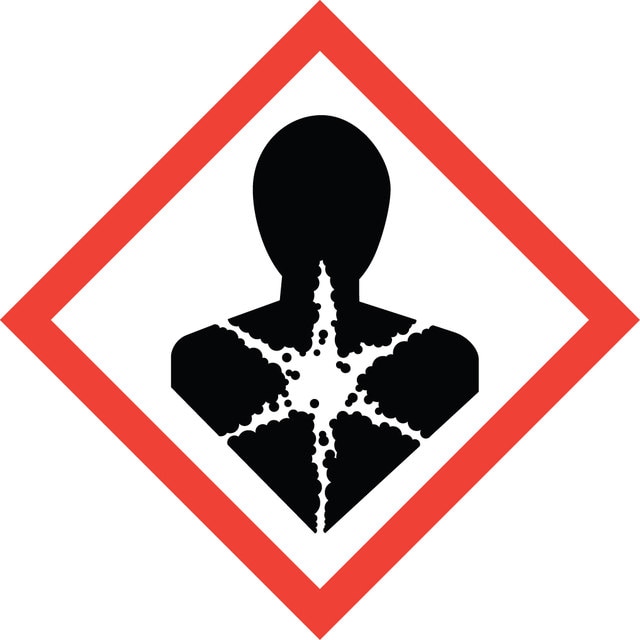
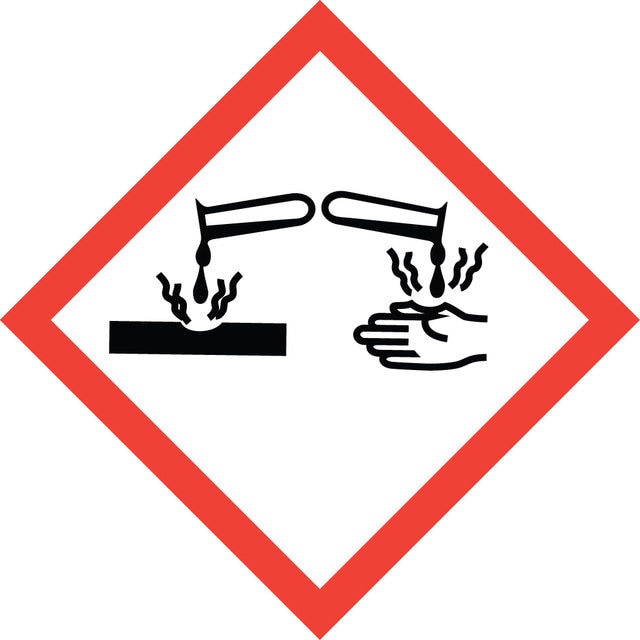

signalword
Danger
Hazard Classifications
Acute Tox. 4 Inhalation - Acute Tox. 4 Oral - Aquatic Chronic 3 - Eye Dam. 1 - Met. Corr. 1 - Skin Corr. 1B - Skin Sens. 1 - STOT RE 2 Oral - STOT SE 3
target_organs
Cardio-vascular system, Respiratory system
저장 등급
8B - Non-combustible corrosive hazardous materials
wgk
WGK 3
flash_point_f
Not applicable
flash_point_c
Not applicable
ppe
Eyeshields, Faceshields, Gloves, type P3 (EN 143) respirator cartridges
Palladium-catalyzed allylic amination of allylic alcohols with tin (II) chloride and triethylamine.
Masuyama Y, et al.
Chemistry Letters (Jpn), 24(12), 1121-1122 (1995)
An efficient and extremely mild catalyst system, combined use of trityl chloride and tin (II) chloride, in the aldol and Michael reactions.
Mukaiyama T, et al.
Chemistry Letters (Jpn), 16(3), 491-494 (1987)
Quantitative assays for esterified oxylipins generated by immune cells.
Morgan AH, et al.
Nature Protocols, 5(12), 1919-1931 (2010)
Transformation of molten SnCl2 to SnO2 nano-single crystals.
Kamali AR, et al.
Ceramics International, 40(6), 8533-8538 (2014)
Tin (II) chloride catalyzed addition of diazo sulfones, diazo phosphine oxides, and diazo phosphonates to aldehydes.
Holmquist CR and Roskamp EJ.
Tetrahedron Letters, 33(9), 1131-1134 (1992)
자사의 과학자팀은 생명 과학, 재료 과학, 화학 합성, 크로마토그래피, 분석 및 기타 많은 영역을 포함한 모든 과학 분야에 경험이 있습니다..
고객지원팀으로 연락바랍니다.