콘텐츠로 건너뛰기
Merck

436143

Sodium dodecyl sulfate

greener alternative

ACS reagent, ≥99.0%

동의어(들):

Dodecyl sodium sulfate, Dodecyl sulfate sodium salt, Lauryl sulfate sodium salt, SDS, Sodium lauryl sulfate

조직 및 계약 가격을 보려면 로그인를 클릭합니다.

크기 선택


제품정보 (DICE 배송 시 비용 별도)

Linear Formula:
CH3(CH2)11OSO3Na
CAS 번호:
Molecular Weight:
288.38
NACRES:
NA.21
PubChem Substance ID:
eCl@ss:
39093306
UNSPSC Code:
12161900
EC Number:
205-788-1
MDL number:
Beilstein/REAXYS Number:
3599286
기술 서비스
도움이 필요하신가요? 저희 숙련된 과학자 팀이 도와드리겠습니다.
도움 문의
기술 서비스
도움이 필요하신가요? 저희 숙련된 과학자 팀이 도와드리겠습니다.
도움 문의

InChI key

DBMJMQXJHONAFJ-UHFFFAOYSA-M

InChI

1S/C12H26O4S.Na/c1-2-3-4-5-6-7-8-9-10-11-12-16-17(13,14)15;/h2-12H2,1H3,(H,13,14,15);/q;+1/p-1

SMILES string

[Na+].CCCCCCCCCCCCOS([O-])(=O)=O

grade

ACS reagent

description

anionic, 62

assay

≥99.0%

form

solid

mol wt

288.38 g/mol

Quality Level

greener alternative product characteristics

Catalysis
Learn more about the Principles of Green Chemistry.

sustainability

Greener Alternative Product

impurities

≤0.06 meq/g Titr. Base, ≥96.0% fatty alcohols, <4.0% unsulfated alcohols

loss

≤1.0% loss on drying

mp

204-207 °C (lit.)

solubility

H2O: soluble 1 gm in 10 ml (opalescent solution)

density

1.03 g/cm3 at 20 °C

cation traces

heavy metals (as Pb): ≤0.002%

λ

3 %H2O reference

UV absorption

λ: 220-350 nm Amax: ≤0.1

HLB

40

greener alternative category

유사한 제품을 찾으십니까? 방문 제품 비교 안내

General description

Sodium dodecyl sulfate (SDS), also known as sodium lauryl sulfate, is a versatile anionic surfactant with a broad range of applications in cell biology, biochemistry, and various industries. Its amphiphilic nature, characterized by a hydrophobic hydrocarbon tail and a hydrophilic sulfate head group, makes it an effective detergent capable of solubilizing and denaturing proteins, lipids, and other hydrophobic molecules.

In protein biochemistry, SDS plays a pivotal role in protein extraction and SDS-PAGE (sodium dodecyl sulfate-polyacrylamide gel electrophoresis). Its ability to denature proteins by disrupting their secondary and tertiary structures allows for their uniform migration through a polyacrylamide gel matrix based on their molecular weight. This technique, SDS-PAGE, has become an indispensable tool for analyzing protein size and purity.

Beyond protein analysis, SDS also finds applications in nucleic acid extraction and hybridization techniques. Its detergent properties aid in the lysis of cells and the solubilization of cellular components, facilitating the extraction of DNA and RNA. This makes SDS a valuable reagent in various molecular biology protocols, including PCR (polymerase chain reaction) and Southern blotting. Sodium dodecyl sulfate stands as a versatile and widely used surfactant with a diverse range of applications due to its ability to solubilize, denature, and separate biological molecules for cell biology and biochemical research.
We are committed to bringing you Greener Alternative Products, which adhere to one or more of The 12 Principles of Greener Chemistry. This product is used as a surfactant to enhance catalysis.  Click here for more information.

Application

Anionic detergent
Sodium dodecyl sulfate was used as a test compound for studying that whether Bacillus amyloliquefaciens KPS46 can induce priming, signaling, protein production as well as systemic protection in soybean (Glycine max L.) against several diseases.

Biochem/physiol Actions

Sodium dodecyl sulfate (SDS) is an anionic detergent that can form complexes with protein through hydrophobic interactions. Studies have reported that the hydrodynamic functions of protein-SDS complexes are governed by the length of their polypeptide chains. Thus, SDS-based electrophoretic techniques can separate protein molecules based on their molecular weights. Additionally, SDS can solubilize cell membranes and can extract membrane-bound proteins.

Features and Benefits

  • Highly versatile surfactant for your molecular biology and biochemical research
  • Tested to confirm low levels of heavy metal contamination, ensuring suitability for various applications

Other Notes

For additional information on our range of Biochemicals, please complete this form.

signalword

Danger

Hazard Classifications

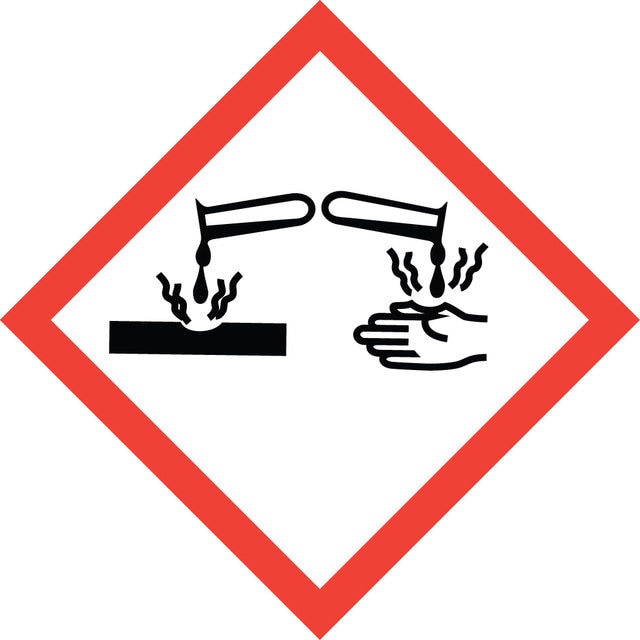
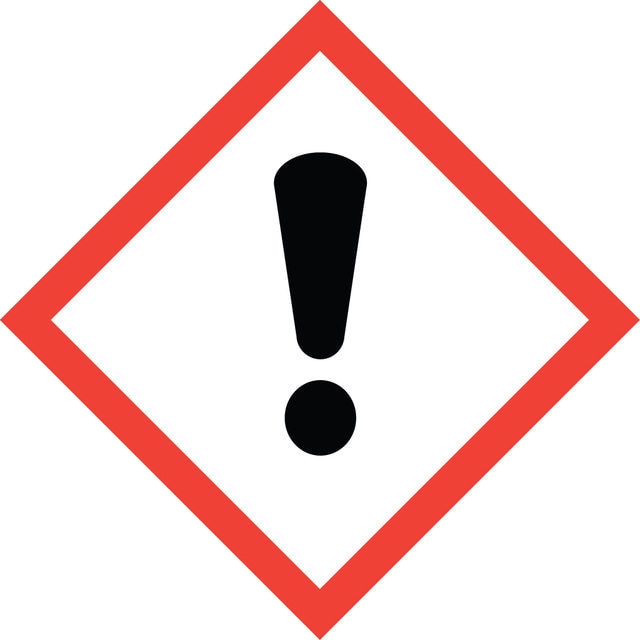
Acute Tox. 4 Inhalation - Acute Tox. 4 Oral - Aquatic Chronic 3 - Eye Dam. 1 - Flam. Sol. 2 - Skin Irrit. 2 - STOT SE 3

target_organs

Respiratory system

저장 등급

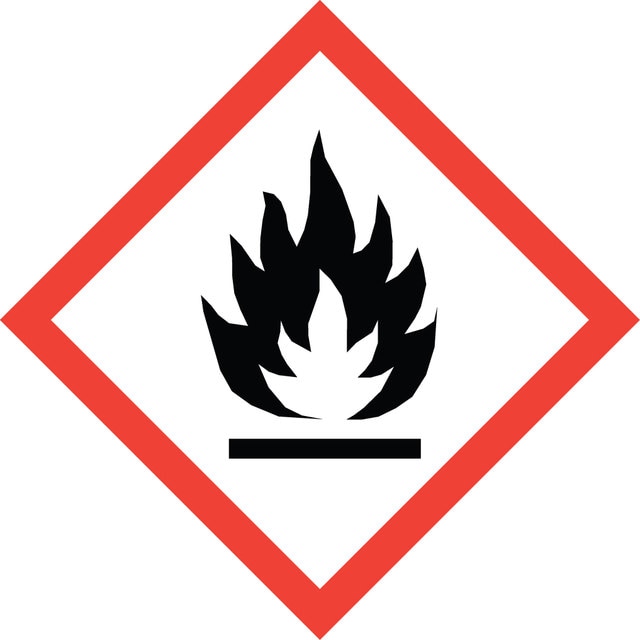
4.1B - Flammable solid hazardous materials

wgk

WGK 2

flash_point_f

338.0 °F

flash_point_c

170 °C

ppe

Eyeshields, Faceshields, Gloves, type P3 (EN 143) respirator cartridges


가장 최신 버전 중 하나를 선택하세요:

시험 성적서(COA)

Lot/Batch Number

적합한 버전을 찾을 수 없으신가요?

특정 버전이 필요한 경우 로트 번호나 배치 번호로 특정 인증서를 찾을 수 있습니다.

이 제품을 이미 가지고 계십니까?

문서 라이브러리에서 최근에 구매한 제품에 대한 문서를 찾아보세요.

문서 라이브러리 방문

Priming, signaling, and protein production associated with induced resistance by Bacillus amyloliquefaciens KPS46.
Natthiya Buensanteai
World Journal of Microbiology & Biotechnology, 25 (2009)
The gross conformation of protein-sodium dodecyl sulfate complexes.
J A Reynolds et al.
The Journal of biological chemistry, 245(19), 5161-5165 (1970-10-10)
K Fujimoto
Journal of cell science, 108 ( Pt 11), 3443-3449 (1995-11-01)
We propose a new electron microscopic method, the sodium dodecylsulphate (SDS)-digested freeze-fracture replica labeling technique, to study the two-dimensional distribution of integral membrane proteins in cellular membranes. Unfixed tissue slices were frozen with liquid helium, freeze-fractured, and replicated in a
Susanne Kohl et al.
Nature genetics, 47(7), 757-765 (2015-06-02)
Achromatopsia (ACHM) is an autosomal recessive disorder characterized by color blindness, photophobia, nystagmus and severely reduced visual acuity. Using homozygosity mapping and whole-exome and candidate gene sequencing, we identified ten families carrying six homozygous and two compound-heterozygous mutations in the
Lekun Fang et al.
Oncotarget, 5(10), 2974-2987 (2014-06-11)
Colorectal cancer (CRC) is one of the most common cancers worldwide, especially in Western countries. Although chemotherapy is used as an adjuvant or as a palliative treatment, drug resistance poses a great challenge. This study intended to identify biomarkers as

프로토콜

Surfactant-assisted dispersion of single-walled carbon nanotubes for debundling or exfoliation in dispersion procedures.

자사의 과학자팀은 생명 과학, 재료 과학, 화학 합성, 크로마토그래피, 분석 및 기타 많은 영역을 포함한 모든 과학 분야에 경험이 있습니다..

고객지원팀으로 연락바랍니다.