
307483

Copper(II) chloride dihydrate
ACS reagent, ≥99.0%
동의어(들):
Cupric chloride dihydrate
조직 및 계약 가격을 보려면 로그인를 클릭합니다.
크기 선택
보기 변경
제품정보 (DICE 배송 시 비용 별도)
Linear Formula:
CuCl2 · 2H2O
CAS 번호:
Molecular Weight:
170.48
NACRES:
NB.24
PubChem Substance ID:
UNSPSC Code:
12352302
EC Number:
231-210-2
MDL number:
Assay:
≥99.0%
Grade:
ACS reagent
Form:
crystalline powder, crystals or granules
grade
ACS reagent
Quality Level
vapor density
>1 (vs air)
assay
≥99.0%
form
crystalline powder, crystals or granules
reaction suitability
reagent type: catalyst
core: copper
impurities
≤0.01% insolubles
mp
100 °C (dec.) (lit.)
anion traces
nitrate (NO3-): ≤0.015%, sulfate (SO42-): ≤0.005%
cation traces
Ca: ≤0.005%, Fe: ≤0.005%, K: ≤0.01%, Na: ≤0.02%, Ni: ≤0.01%
SMILES string
Cl[Cu]Cl.[H]O[H].[H]O[H]
InChI
1S/2ClH.Cu.2H2O/h2*1H;;2*1H2/q;;+2;;/p-2
InChI key
MPTQRFCYZCXJFQ-UHFFFAOYSA-L
Application
Copper(II) chloride dihydrate can be used as a catalyst:
- For the conversion of dimedone into N-arylhydrazinecarbothioamide based indazole derivatives by reacting with phenylhydrazine, hydrazine hydrate, and substituted arylisothiocyanates.
- In the three-component Domino reaction ofarylboronic acids, arylcyanamides, and amines to synthesize 2-aminobenzimidazoles in the presence of bipyridine ligand.
Still not finding the right product?
Explore all of our products under Copper(II) chloride dihydrate


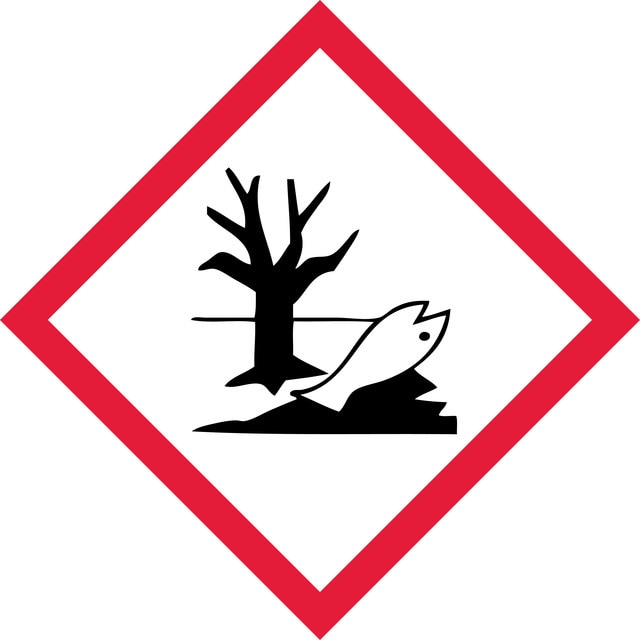
signalword
Danger
Hazard Classifications
Acute Tox. 4 Dermal - Acute Tox. 4 Oral - Aquatic Acute 1 - Aquatic Chronic 2 - Eye Dam. 1 - Skin Irrit. 2
저장 등급
8B - Non-combustible corrosive hazardous materials
wgk
WGK 3
flash_point_f
Not applicable
flash_point_c
Not applicable
Interaction of hydrazine with copper (II) chloride in acidic solutions. Formation, spectral and magnetic properties, and structures of copper (II), copper (I), and mixed-valence species.
Brown DB, et al.
Inorganic Chemistry, 18(10), 2635-2641 (1979)
An X-ray refinement of the crystal structure of copper (II) chloride dihydrate.
Engberg ?.
Acta Chemica Scandinavica, 24(10), 6-6 (1970)
Deprotection of t-butyldimethylsiloxy (TBDMS) protecting group with catalytic copper (II) chloride dihydrate.
TAN ZP, et al.
Chinese Chemical Letters = Zhongguo Hua Xue Kuai Bao, 11(9), 753-756 (2000)