콘텐츠로 건너뛰기
Merck

62320

(±)-α-Lipoic acid

≥98.0% (HPLC), solid

동의어(들):

(±)-1,2-Dithiolane-3-pentanoic acid, 6,8-Dithiooctanoic acid, DL-α-Lipoic acid, DL-6,8-Thioctic acid, Lip(S2)

조직 및 계약 가격을 보려면 로그인를 클릭합니다.

크기 선택


제품정보 (DICE 배송 시 비용 별도)

실험식(Hill 표기법):
C8H14O2S2
CAS 번호:
Molecular Weight:
206.33
UNSPSC Code:
12352100
PubChem Substance ID:
NACRES:
NA.21
EC Number:
214-071-2
MDL number:
Beilstein/REAXYS Number:
81853
Assay:
≥98.0% (HPLC), ≥98.0%
Form:
solid
기술 서비스
도움이 필요하신가요? 저희 숙련된 과학자 팀이 도와드리겠습니다.
도움 문의
기술 서비스
도움이 필요하신가요? 저희 숙련된 과학자 팀이 도와드리겠습니다.
도움 문의

제품 이름

(±)-α-Lipoic acid, ≥98.0%

Quality Level

assay

≥98.0% (HPLC), ≥98.0%

form

solid

ign. residue

≤0.1%

loss

≤0.2% loss on drying

bp

>286 °C/1.013 hPa

mp

60-62 °C

solubility

water: 0.87 g/L at 22 °C

density

1.4 g/cm3 at 23 °C

functional group

carboxylic acid, disulfide

storage temp.

2-8°C

SMILES string

[OC(=O)CCCCC1CCSS1], OC(=O)CCCCC1CCSS1

InChI

[1S/C8H14O2S2/c9-8(10)4-2-1-3-7-5-6-11-12-7/h7H,1-6H2,(H,9,10)], 1S/C8H14O2S2/c9-8(10)4-2-1-3-7-5-6-11-12-7/h7H,1-6H2,(H,9,10)

InChI key

[AGBQKNBQESQNJD-UHFFFAOYSA-N], AGBQKNBQESQNJD-UHFFFAOYSA-N

Gene Information

유사한 제품을 찾으십니까? 방문 제품 비교 안내

General description

α-lipoic acid (ALA, thioctic acid) is a natural organosulfur compound produced in plants, animals and humans. It is a powerful antioxidant and plays a role in the forming nucleic acids, building blocks of DNA.

This product is a racemic mixture.

Application

(±)-α-Lipoic acid has been used:

  • In in vitro lipoylation studies and in the pyruvate dehydrogenase complex (PDC)-pyruvate dehydrogenase kinase (PDHK) functional assay.
  • To investigate its antioxidative effect on developing cerebellum of rats exposed to arsenic during postnatal period.

Biochem/physiol Actions

Antioxidant and coenzyme needed for the activity of enzyme complexes such as pyruvate dehydrogenase and glycine decarboxylase.
Antioxidant and coenzyme needed for the activity of enzyme complexes such as those of pyruvate dehydrogenase and glycine decarboxylase. Exogenous thioctic acid is reduced intracellularly by two or more enzymes. The reduced form then influences a number of cell processes by direct radical scavenging, recycling of other antioxidants, increasing glutathione synthesis, and modulating transcription factor activity particularly that of NF-κB. Decreases the phagocytosis of myelin by macrophages.
(±)-α-Lipoic acid exhibits direct free radical scavenging property and reduces the increased oxidative stress. In addition, it might also exhibit prooxidant activity. α-Lipoic acid functions as an important prosthetic group in α-keto acid dehydrogenase complexes of the mitochondria. It acts as a potential therapeutic for diabetic patients with distal symmetric polyneuropathy (DSP). α-Lipoic acid is also used in the treatment of energy-impaired and redox unbalanced diseases.

pictograms

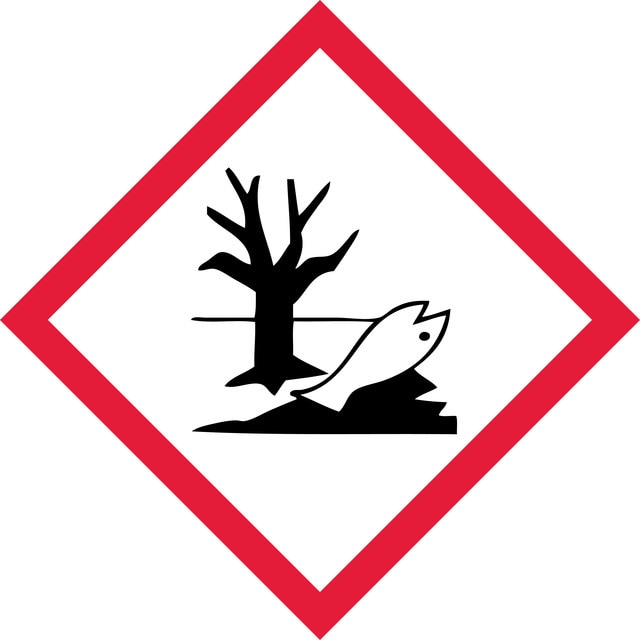
Exclamation markEnvironment

signalword

Warning

Hazard Classifications

Acute Tox. 4 Oral - Aquatic Chronic 2 - Eye Irrit. 2 - Skin Irrit. 2 - Skin Sens. 1

저장 등급

11 - Combustible Solids

wgk

WGK 2

flash_point_f

Not applicable

flash_point_c

Not applicable

ppe

dust mask type N95 (US), Eyeshields, Gloves


가장 최신 버전 중 하나를 선택하세요:

시험 성적서(COA)

Lot/Batch Number

It looks like we've run into a problem, but you can still download Certificates of Analysis from our 문서 section.

도움이 필요하시면 연락하세요. 고객 지원 부서

이 제품을 이미 가지고 계십니까?

문서 라이브러리에서 최근에 구매한 제품에 대한 문서를 찾아보세요.

문서 라이브러리 방문

Antioxidant and prooxidant activities of alpha-lipoic acid and dihydrolipoic acid
Moini H, et al.
Toxicology and Applied Pharmacology, 182(1), 84-90 (2002)
alpha-Lipoic acid in liver metabolism and disease
Bustamante J, et al.
Free Radical Biology & Medicine, 24(6), 1023-1039 (1998)
Oral treatment with alpha-lipoic acid improves symptomatic diabetic polyneuropathy: the SYDNEY 2 trial
Ziegler D, et al.
Diabetes Care, 29(11), 2365-2370 (2006)
M. Koike et al.
Antibiotics, Vitamins and Hormones, 112-112 (1977)
Component co-expression and purification of recombinant human pyruvate dehydrogenase complex from baculovirus infected SF9 cells
Jiang Y, et al.
Protein Expression and Purification, 97, 9-16 (2014)

문서

Antioxidants protect biological systems from oxidative damage produced by oxygen-containing free radicals and from redoxactive transition metal ions such as iron, copper, and cadmium.

자사의 과학자팀은 생명 과학, 재료 과학, 화학 합성, 크로마토그래피, 분석 및 기타 많은 영역을 포함한 모든 과학 분야에 경험이 있습니다..

고객지원팀으로 연락바랍니다.