
75633

Osmium tetroxide solution
suitable for electron microscopy, 2% in H2O
동의어(들):
Osmium(IV) oxide
조직 및 계약 가격을 보려면 로그인를 클릭합니다.
크기 선택
보기 변경
제품정보 (DICE 배송 시 비용 별도)
Linear Formula:
OsO4
CAS 번호:
Molecular Weight:
254.23
NACRES:
NA.47
PubChem Substance ID:
UNSPSC Code:
12171500
MDL number:
Form:
solution
form
solution
Quality Level
reaction suitability
reagent type: oxidant
concentration
2% in H2O
technique(s)
electron microscopy: suitable
color
colorless to yellow
density
1.0 g/mL at 20 °C
application(s)
hematology
histology
storage temp.
2-8°C
SMILES string
O=[Os](=O)(=O)=O
InChI
1S/4O.Os
InChI key
VUVGYHUDAICLFK-UHFFFAOYSA-N
유사한 제품을 찾으십니까? 방문 제품 비교 안내
General description
Osmium tetroxide (OsO4) also referred to as osmium, is a heavy tetrahedral, symmetrical molecule. It is both a dye and a non-coagulant fixative agent in electron microscopy primarily used for the examination of biological tissue components in the histopathology laboratory. Specimens are postfixed with osmium tetroxide to ensure the preservation of the lipids.
Application
Osmium tetroxide solution has been used as a fixative in electron microscopy.
Biochem/physiol Actions
Osmium tetroxide is also referred to as osmium and is mainly used as a secondary fixative of tissues. The molecule reacts with lipid moieties and is responsible for the oxidation of unsaturated bonds of fatty acids. This reaction adds density and contrast to biological samples. In normal tissues, presence of osmium results in intense black staining which can be viewed by normal eye. In addition, it can be used as a mordant (a molecule which combines with stain or dye at later stages) in electron microscopy, thereby enhancing lead staining.
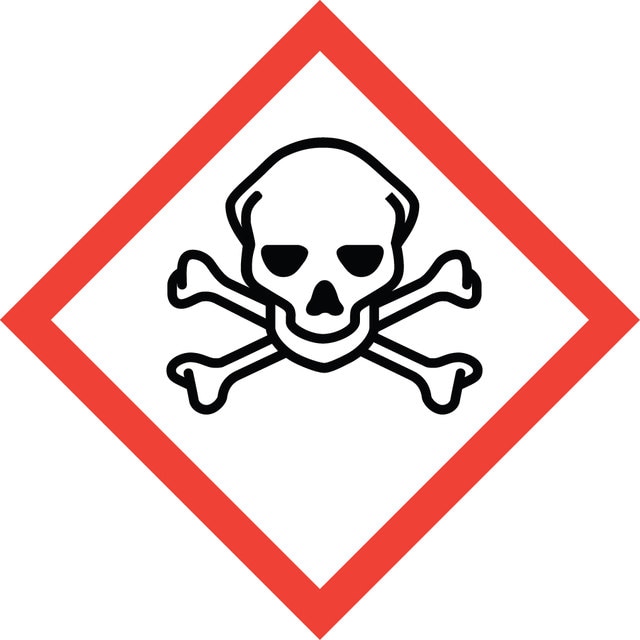
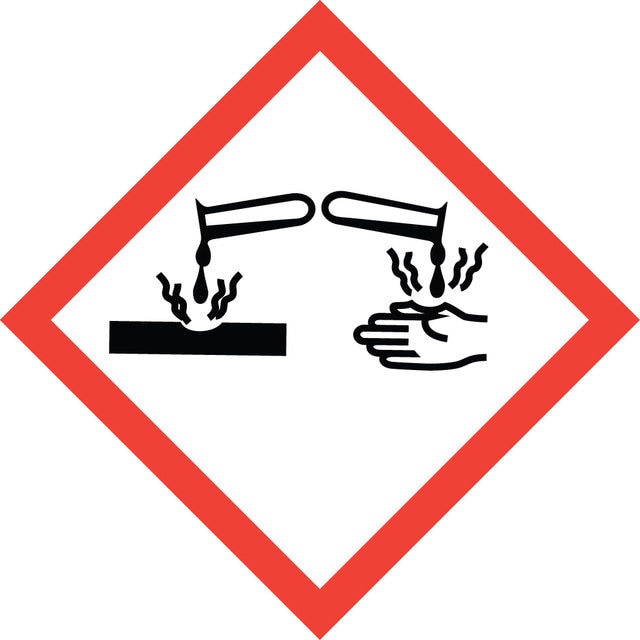
signalword
Danger
Hazard Classifications
Acute Tox. 2 Dermal - Acute Tox. 4 Inhalation - Acute Tox. 4 Oral - Eye Dam. 1 - Skin Irrit. 2
저장 등급
6.1B - Non-combustible acute toxic Cat. 1 and 2 / very toxic hazardous materials
wgk
WGK 1
flash_point_f
Not applicable
flash_point_c
Not applicable
ppe
Faceshields, Gloves, Goggles, type ABEK (EN14387) respirator filter
Regulation of nitric-oxide production in hemocytes of the ascidian Phallusia nigra.
de Barros CM, et al.
Nitric Oxide, 38, 26-26 (2014)
3-acetylpyridine-induced degeneration in the adult ascidian neural complex: Reactive and regenerative changes in glia and blood cells.
Medina BN, et al.
Developmental neurobiology, 75, 877-877 (2015)
Electron Microscopy: Principles and Techniques for Biologists (1999)
Carsten Købler et al.
Analytical and bioanalytical chemistry, 406(16), 3863-3873 (2014-01-23)
Ultrastructural characterisation is important for understanding carbon nanotube (CNT) toxicity and how the CNTs interact with cells and tissues. The standard method for this involves using transmission electron microscopy (TEM). However, in particular, the sample preparation, using a microtome to
F Wyss et al.
Veterinary pathology, 52(6), 1235-1242 (2015-01-27)
Pododermatitis is frequent in captive flamingos worldwide, but little is known about the associated histopathologic lesions. Involvement of a papillomavirus or herpesvirus has been suspected. Histopathologic evaluation and viral assessment of biopsies from 19 live and 10 dead captive greater
자사의 과학자팀은 생명 과학, 재료 과학, 화학 합성, 크로마토그래피, 분석 및 기타 많은 영역을 포함한 모든 과학 분야에 경험이 있습니다..
고객지원팀으로 연락바랍니다.