SMILES string
O(CC)C(=O)c1ccc(cc1)O
InChI
1S/C9H10O3/c1-2-12-9(11)7-3-5-8(10)6-4-7/h3-6,10H,2H2,1H3
InChI key
NUVBSKCKDOMJSU-UHFFFAOYSA-N
biological source
bovine liver
description
optimum pH ~ 7.0
sterility
aseptically filled
form
aqueous solution
specific activity
≥30,000 units/mg protein
mol wt
tetramer ~250 kDa
contains
≤0.10 mg/mL Thymol
composition
ammonium sulphate, 30-50% , catalase, 10-20%
storage condition
(Tightly closed. Keep locked up or in an area accessible only to qualified or authorized
persons)
technique(s)
activity assay: suitable
isoelectric point
5.4
pI
5.4
UniProt accession no.
shipped in
wet ice
storage temp.
2-8°C
Quality Level
Gene Information
cow ... CAT(280743)
유사한 제품을 찾으십니까? 방문 제품 비교 안내
Application
Catalase acts as a natural antioxidant to study the roles of reactive oxygen species in gene expression and apoptosis. It has also been used to protect against oxidative damage to proteins, lipids, and nucleic acids. Industrially, catalzes have been used to remove hydrogen peroxide added to milk and cheese, in textile bleaching, and to examine its positive effects on the viability of DNA-repair mutants of E. coli.
Catalase from bovine liver may be used:
- to prepare H2O2-O2 based biocathode for applications in glucose biofuel cells
- to study the kinetic properties and storage stability of catalase immobilized on to florisil
- in glutathione-mediated superoxide generation in an aqueous solution
Catalase from bovine liver has been used:
- as a component of the GLOX buffer during single molecule fluorescent in situ hybridization (smFISH) on primary mouse cortical neurons
- for its structural and kinetic analysis of its interaction with nitric oxide
- in the preparation of glucose oxidase-catalase system (GOX-CAT system) to generate H2O2 and study the effect of H2O2-induced oxidative stress on myelination in mouse organotypic cerebellar slice cultures
Biochem/physiol Actions
Catalase is an active, ubiquitous enzyme that is found in all aerobic organisms. Lower levels of catalase and oxidative stress lead to several disorders such as vitiligo, hypertension, acatalasemia, cancer, diabetes mellitus, and Alzheimer’s.
Catalase, an antioxidant enzyme found in all aerobic organisms, catalyzes the degradation of hydrogen peroxide, a byproduct of metabolic processes, into less harmful water and oxygen. It can also react with alkylhydrogen peroxides, such as methylperoxide and ethylperoxide and the second H2O2 molecule can be replaced by methanol, ethanol, propanol, formate and nitrate as a hydrogen donor. Catalase enzyme uses either iron (Fe) or manganese (Mn) as cofactor, and are classified as Fe-CAT or Mn-CAT.
Disclaimer
Solutions of catalse should not be frozen. Frozen solution will result in a 50-70% loss of activity.
General description
Research Area: Cell Signaling
Catalase from bovine liver is a tetramer consisting of 4 equal subunits each with a 60 kDa molecular weight. Each of these subunits contains iron bound to a protoheme IX group. The enzyme will also strongly bind to NADP, where NADP and the heme group are within 13.7 angstroms.
Research area: Cell Signaling
Catalase from bovine is a tetrameric enzyme, consisting of four identical sub-units containing a single heme moiety per subunit. Each subunit has four domains like the α-helical domain, an eight-stranded β-barrel, N-terminal threading arm that is connected to the β-barrel via a wrapping loop.
Other Notes
One unit will decompose 1.0 μmole of H2O2 per min at pH 7.0 at 25 °C, while the H2O2 concentration falls from 10.3 to 9.2 mM, measured by the rate of decrease of A240.
Preparation Note
This product is an aqueous solution containing >30,000 units/mg protein. To remove the thymol preservative, the catalase crystals may be pelleted by centrifugation, the supernatant, discarded, the pellet resuspended in water, and then pelleted again. The enzyme is soluble in 50 mM potassium phosphate buffer at 1 mg/mL and pH 7.0.
signalword
Danger
hcodes
pcodes
Hazard Classifications
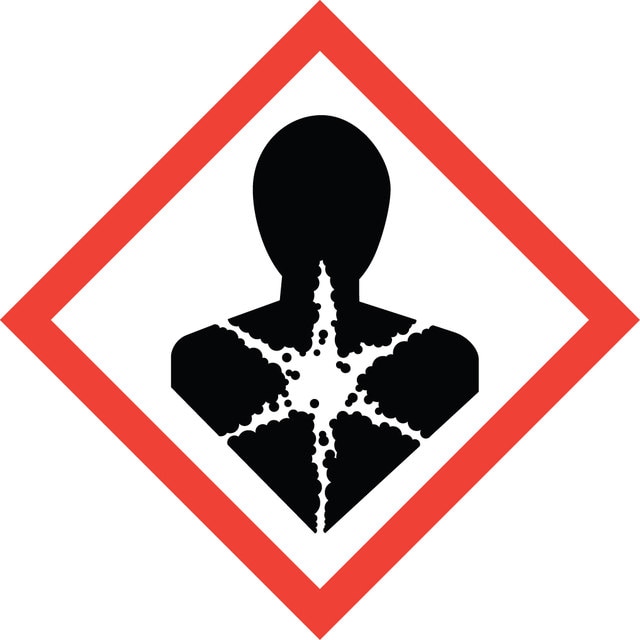
Resp. Sens. 1
저장 등급
12 - Non Combustible Liquids
wgk
WGK 1
flash_point_f
Not applicable
flash_point_c
Not applicable
ppe
Eyeshields, Gloves, multi-purpose combination respirator cartridge (US)
Camilla Ciolli Mattioli et al.
Nucleic acids research, 47(5), 2560-2573 (2018-12-28)
The proper subcellular localization of RNAs and local translational regulation is crucial in highly compartmentalized cells, such as neurons. RNA localization is mediated by specific cis-regulatory elements usually found in mRNA 3'UTRs. Therefore, processes that generate alternative 3'UTRs-alternative splicing and
Trine Juul et al.
The Journal of biological chemistry, 285(28), 21411-21415 (2010-05-11)
Hydroxyurea (HU) is a well tolerated ribonucleotide reductase inhibitor effective in HIV, sickle cell disease, and blood cancer therapy. Despite a positive initial response, however, most treated cancers eventually progress due to development of HU resistance. Although RNR properties influence
Koodathingal Prakash et al.
Protein science : a publication of the Protein Society, 11(1), 46-57 (2001-12-14)
Catalases, although synthesized from single genes and built up from only one type of subunit, exist in heterogeneous form with respect to their conformations and association states in biological systems. This heterogeneity is not of genetic origin, but rather reflects
Namrta Purwar et al.
Biochemistry, 50(21), 4491-4503 (2011-04-29)
We present the structures of bovine catalase in its native form and complexed with ammonia and nitric oxide, obtained by X-ray crystallography. Using the NO generator 1-(N,N-diethylamino)diazen-1-ium-1,2-diolate, we were able to generate sufficiently high NO concentrations within the catalase crystals
Amjad Askary et al.
Nature biotechnology, 38(1), 66-75 (2019-11-20)
Molecular barcoding technologies that uniquely identify single cells are hampered by limitations in barcode measurement. Readout by sequencing does not preserve the spatial organization of cells in tissues, whereas imaging methods preserve spatial structure but are less sensitive to barcode
프로토콜
This procedure may be used for all Catalase products.
자사의 과학자팀은 생명 과학, 재료 과학, 화학 합성, 크로마토그래피, 분석 및 기타 많은 영역을 포함한 모든 과학 분야에 경험이 있습니다..
고객지원팀으로 연락바랍니다.