manufacturer/tradename
Distributed for Phanos Technologies
Quality Level
storage condition
protect from light
technique(s)
flow cytometry: suitable
fluorescence
λex 655 nm; λem 675 nm
application(s)
cell analysis
detection
detection method
fluorometric
shipped in
ambient
storage temp.
room temp
Application
CellVue Claret kit fluoresces in the far red and may be used for general cell membrane labeling including in vitro cell labeling, in vitro lymphocyte proliferation studies,† in vivo cytotoxicity assays,† and also as a second color for monitoring cell-cell membrane transfer.†
Biochem/physiol Actions
The CellVue Claret Fluorescent Cell Linker kit uses a proprietary membrane labeling technology to stably incorporate a far red fluorescent dye with long aliphatic tails (CellVue Claret) into lipid regions of the cell membrane.†
Packaging
This kit provides enough dye for up to 50 samples of 20 million cells each and enough diluent for up to 30 samples of 20 million cells each when using a 2 mL final staining volume containing a final concentration of 2 x 10⁻⁶ M of PKH26 dye. Users must determine the optimal dye and cell concentrations from their cell type(s) and experimental purposes.
Other Notes
For additional technical details on Fluorescent Cell Linker Dyes including a comprehensive bibliography, please visit PKH and CellVue®; Claret Fluorescent Cell Linker Dyes.
Legal Information
Distributed for Phanos Technologies, Inc.
Patent Information
Patent Information
CellVue is a registered trademark of Phanos Technologies
signalword
Danger
hcodes
Hazard Classifications
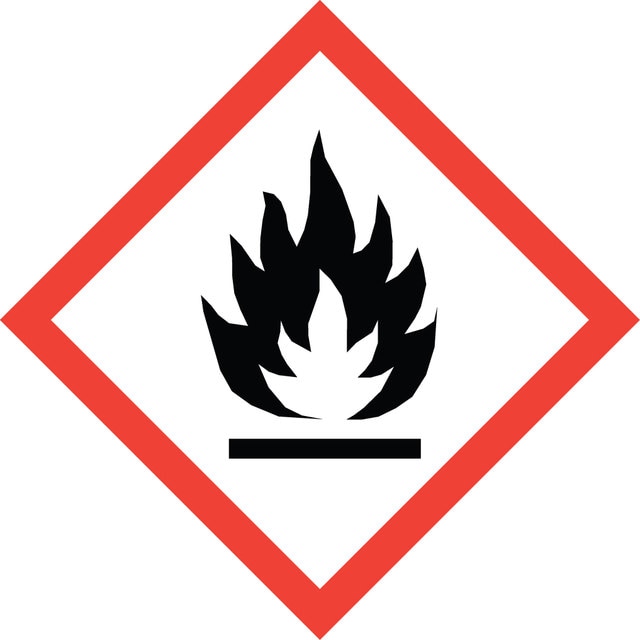
Eye Irrit. 2 - Flam. Liq. 2
wgk
WGK 1
문서
Lipophilic cell tracking dyes enable cancer biologists to track tumor and immune cell functions both in vitro and in vivo. Read the article to choose a right membrane dye kit for cell tracking and proliferation monitoring.
Optimal staining is a key component for studying tumorigenesis and progression. Learn useful tips and techniques for dye applications, including examples from recent studies.
PKH and CellVue® Fluorescent Cell Linker Kits provide fluorescent labeling of live cells over an extended period of time, with no apparent toxic effects.
Allistair A Abraham et al.
Pediatric blood & cancer, 66(5), e27601-e27601 (2019-01-05)
Sickle cell disease (SCD) is increasingly recognized as a red blood cell disorder modulated by abnormally increased inflammation. We have previously shown that in patients with SCD not on a disease-modifying therapy (hydroxyurea or chronic transfusions), natural killer (NK) cell
Mercedes Rodriguez Garcia et al.
The Journal of clinical investigation, 120(7), 2486-2496 (2010-06-17)
One of the main unresolved questions in solid organ transplantation is how to establish indefinite graft survival that is free from long-term treatment with immunosuppressive drugs and chronic rejection (i.e., the establishment of tolerance). The failure to achieve this goal
Seishiro Hirano et al.
Toxicology and applied pharmacology, 259(1), 96-103 (2012-01-03)
The toxicity of carbon nanotubes (CNTs), a highly promising nanomaterial, is similar to that of asbestos because both types of particles have a fibrous shape and are biopersistent. Here, we investigated the characteristics of macrophage receptor with collagenous structure (MARCO)